Manufacturing Analytics Is Changing How Australian SMEs Run Their Floors
Manufacturing analytics has moved from the domain of large-scale enterprise operations into something genuinely accessible — and genuinely useful — for Australian SME manufacturers. The shift is being driven by AI: systems that can pull together data from the shop floor, the accounts, the payroll and the order book, and surface what actually matters without requiring a dedicated data analyst.
For operators running job shops, fabrication businesses, food processing facilities or light assembly lines, this matters now. Margin pressure is real. Labour costs continue to rise. Material costs remain volatile. And the [Productivity Commission](https://www.pc.gov.au) has consistently highlighted productivity improvement as a critical lever for Australian businesses competing in a global market. AI-driven tools are one of the most practical ways to pull that lever.
This article looks at three areas where AI is making a measurable difference for manufacturing SMEs: freeing up staff time through automated reporting, catching margin leaks and operational problems early, and identifying the products, jobs and customer segments that are already performing well.
---
How AI Is Reshaping Manufacturing Operations
Freeing Up Staff Time With Automated Reporting
In most manufacturing SMEs, reporting is done manually — someone pulls figures from the accounting system, cross-references the job cards, tallies labour hours from the payroll system and produces a weekly or monthly summary. It takes hours. And by the time it lands on a desk, it is already out of date.
AI-driven manufacturing analytics platforms change this by connecting your data sources — accounting, payroll, job costing — and generating reports automatically. Instead of a manager spending a morning compiling numbers, the system does it overnight and delivers a summary that flags what needs attention.
The practical benefit is not just time saved. It is that your people are looking at current data, not last fortnight's picture. For job shops especially, where job margins can shift quickly as materials and labour hours accumulate, real-time visibility is the difference between catching a problem on job 7 and discovering it on the invoice.
---
Reducing Weaknesses: Catching Problems Before They Compound
Three metrics matter most for manufacturing SME operators who want to reduce their vulnerabilities:
- Overall Equipment Effectiveness (OEE): A composite measure of availability, performance and quality. A drop in OEE — even a modest one — typically signals a maintenance issue, a scheduling bottleneck or a quality problem that is compounding scrap. Tracking OEE over time and by machine or line makes it visible before it becomes expensive.
- Scrap rate: When scrap creeps up, it erodes job margins silently. AI systems that monitor scrap rate by job, by material or by shift can identify patterns — a particular operator, a particular raw material batch, a particular time of day — that manual review often misses entirely.
- Job costing variance: The gap between your estimated job cost and your actual job cost is one of the most important numbers in a job-shop environment. AI can flag jobs where actuals are running ahead of estimates in real time, allowing you to intervene, renegotiate or simply understand why — before the loss is locked in.
Labour compliance adds another layer. Manufacturing is subject to specific award conditions, penalty rates and overtime rules. The Fair Work Ombudsman provides detailed guidance on award obligations, and AI-driven compliance monitoring can flag when rostered hours or overtime patterns risk pushing you outside those boundaries — protecting both your workers and your business.
---
Capitalising on Strengths: Your Best Jobs, Products and Customers
AI is equally useful for identifying what is working, not just what is not. For manufacturing SMEs, this means understanding:
- Which job types consistently come in on budget or better
- Which product lines carry the strongest margins after all costs are factored in
- Which customers place repeat orders with predictable specifications — reducing setup time and quoting effort
- Which operators or teams consistently deliver the highest quality output
Once you can see these patterns clearly, you can make deliberate decisions: bid more aggressively for the jobs you do well, invest in the product lines with the best margins, nurture the customer relationships that generate reliable revenue. The [Australian Bureau of Statistics](https://www.abs.gov.au) tracks industry composition and business counts across manufacturing sub-sectors — useful context for understanding where your business sits within a broader landscape.
---
How Corvana Applies AI to Manufacturing SMEs
Corvana is an Australian AI business-intelligence platform built for SME operators. For manufacturing businesses, it works by unifying data from your accounting system — Xero, MYOB or QuickBooks — with your payroll and rostering tools, including Deputy, Tanda and Employment Hero, and your CRM or sales pipeline via HubSpot, Salesforce or ActiveCampaign.
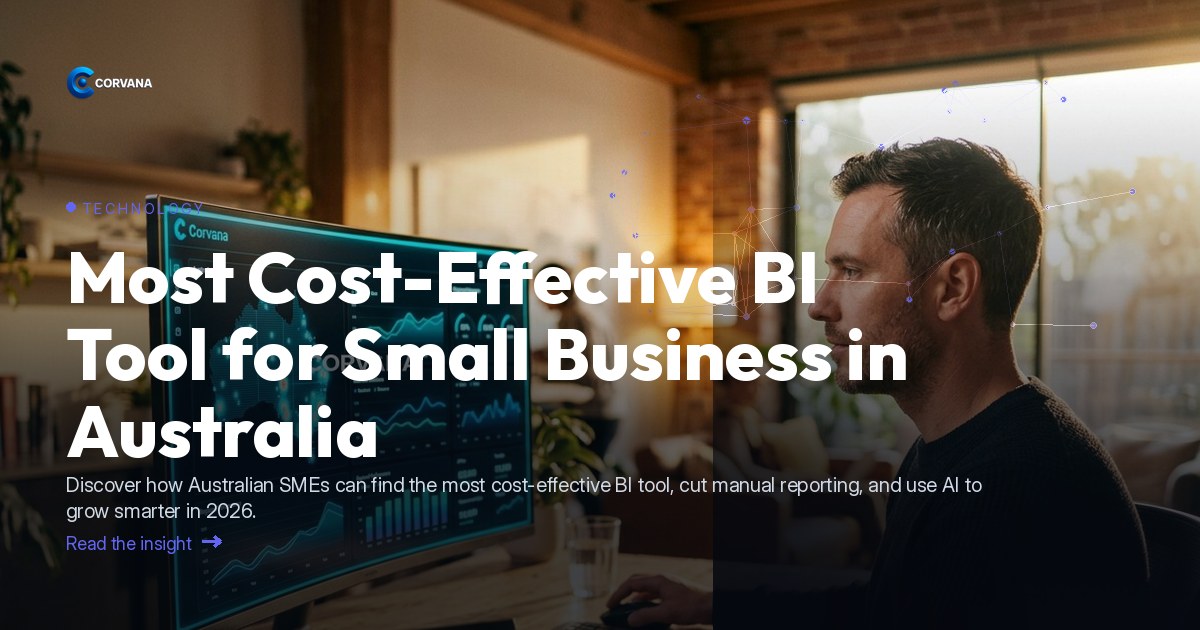
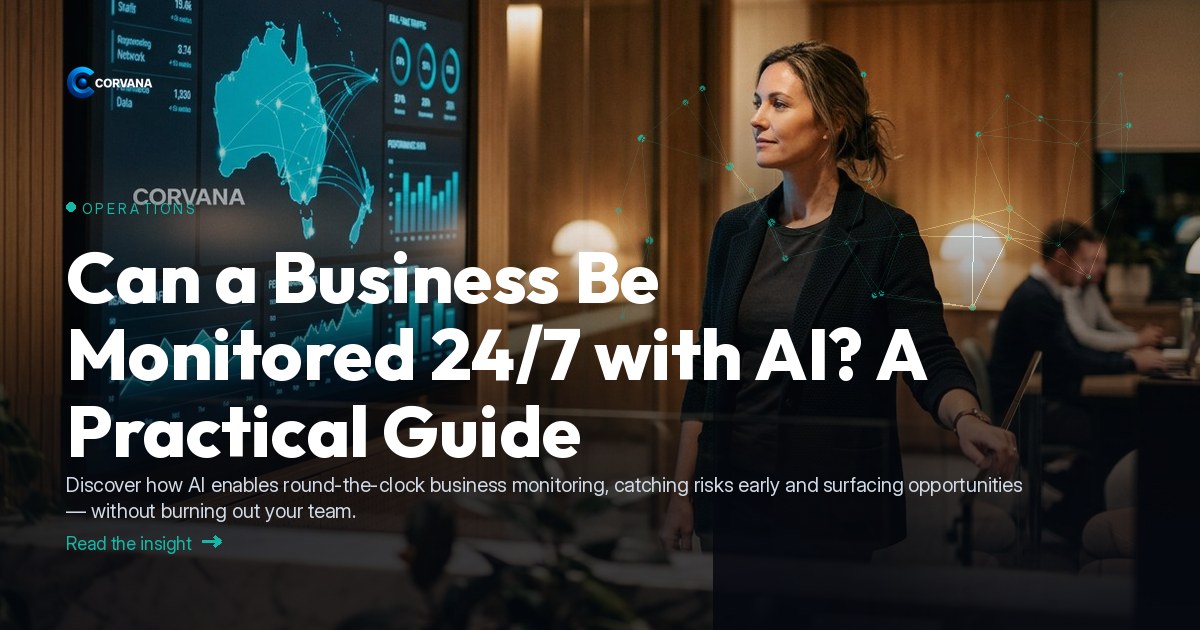
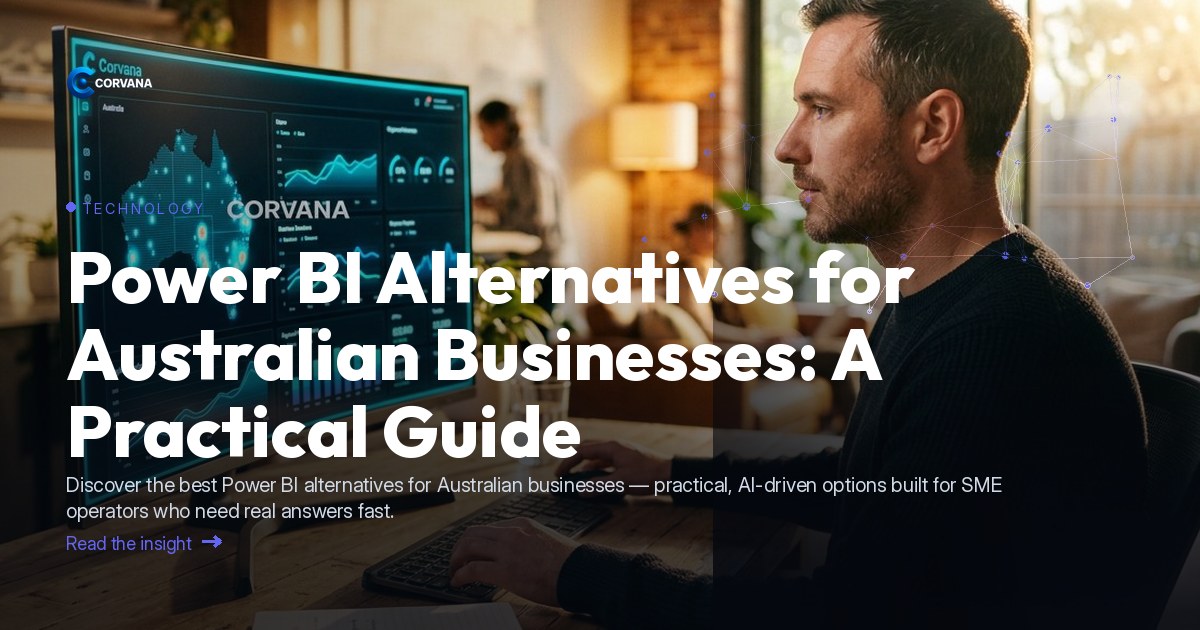
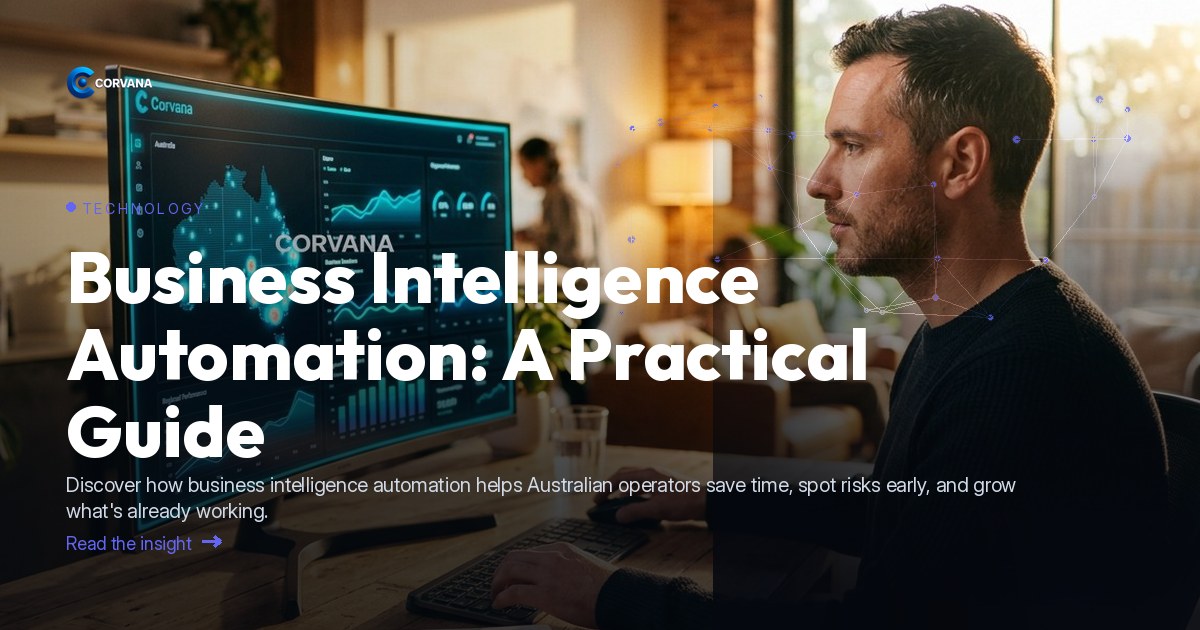
From those connected data sources, Corvana builds a live operational dashboard that shows job costing actuals versus estimates, labour cost by role and shift, gross margin by product or job type, and cash flow position — updated in real time, not at month end.
Key capabilities for manufacturing SMEs include:
- Automated weekly reporting: A structured summary delivered to owners and managers without anyone having to compile it manually
- AI-driven cash flow forecasting: Forward visibility on cash position based on outstanding jobs, receivables and upcoming payroll — critical for businesses with long job cycles or lumpy revenue
- Early-warning alerts: Notifications when job costs are running over estimate, when scrap rates trend upward, or when a customer's order frequency drops in a way that suggests churn risk
- Benchmarking: Your margins and cost structure compared against ATO and ANZSIC industry data, so you know whether your numbers are genuinely strong or just feel that way
- Role-based permissions: Your production manager sees floor-level job data; your owner sees the full financial picture — the right information to the right person
For businesses that also sell direct or manage inventory through Shopify or Lightspeed, Corvana connects those data streams too, giving you a single view from order through to job completion and payment.
---
Frequently Asked Questions
Do I need to be a large manufacturer to get value from OEE tracking and job costing analytics?
No — in fact, smaller manufacturers often benefit more because they have less buffer for margin leaks. If you are running a job shop with five to fifty staff, a single job running 15% over budget on labour has a meaningful impact on your monthly result. AI tools designed for SMEs give you the same visibility that larger operations have, without requiring a dedicated analyst or a custom software build.
How does AI help with job costing specifically?
AI-driven job costing connects your estimated costs at quoting stage with your actual costs as they accumulate — labour hours from your payroll system, materials from your purchasing records, and overhead allocations from your accounting platform. It flags variances in real time rather than at invoice stage, so you can intervene on a live job rather than simply document a loss after the fact.
Is it difficult to set up a manufacturing analytics platform like Corvana if my data is spread across different systems?
Corvana is designed to integrate with the accounting, payroll and CRM tools that Australian SMEs already use — Xero, MYOB, Deputy, Tanda, HubSpot and others — so setup typically involves connecting existing accounts rather than migrating data or replacing systems. Most manufacturing operators are live with a working dashboard within days, not months.
---
If you want to see how Corvana brings together your job costing, OEE trends and cash flow into one clear picture, we are happy to walk you through it.