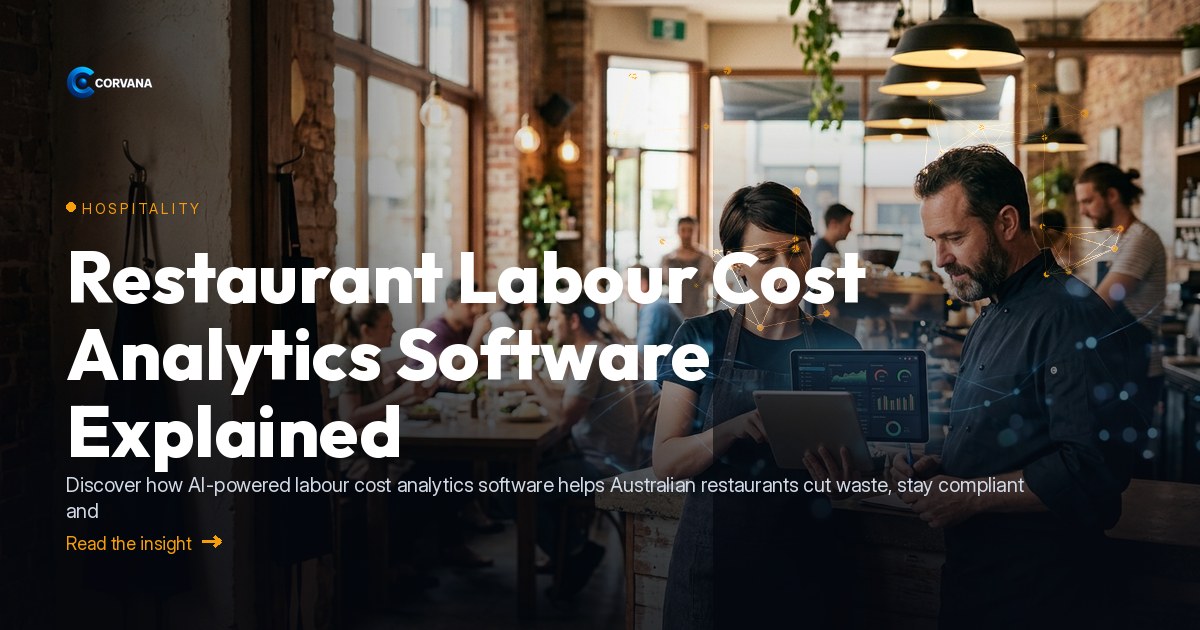
Restaurant Labour Cost Analytics Software Explained
AI is fundamentally reshaping how Australian restaurants manage their single largest controllable expense: labour. Restaurant labour cost analytics — the practice of using live data and intelligent forecasting to understand, control and optimise staff costs — is no longer a tool reserved for large chains. Today, independent cafés, multi-site restaurants and quick-service operators across Australia are using AI-driven platforms to turn their rostering, payroll and POS data into decisions that protect margin and improve team performance.
The pressure is real. Wages under the Hospitality Industry (General) Award, penalty rates, superannuation obligations and increasingly complex rostering demands mean that even a small miscalculation in staff scheduling can quietly erode profitability week after week. Staying across those obligations is non-negotiable — the Fair Work Ombudsman actively audits hospitality businesses, and underpayment penalties have become a high-profile risk across the industry.
What Is Restaurant Labour Cost Analytics Software?
Restaurant labour cost analytics software connects your rostering, payroll, POS and accounting systems to give you a real-time picture of what labour is actually costing you — and why. The best platforms don't just report the past; they forecast demand, flag when your labour-to-revenue ratio is drifting out of range, and surface the specific shifts, roles or locations driving the problem. For Australian operators, this means fewer surprises on the weekly P&L and a much clearer line of sight between scheduling decisions and business outcomes.
Why Labour Cost Is the Number Australian Restaurants Can't Ignore
Labour typically represents the largest variable cost in a restaurant's operating model — often running well above 30% of revenue when award conditions, penalties and on-costs are factored in. Unlike food cost, which can be controlled through supplier negotiations and menu engineering, labour cost is dynamic: it moves with trade patterns, staff availability, award tiers and seasonal demand.
[Tourism Research Australia](https://www.tra.gov.au) data consistently shows that domestic dining and hospitality expenditure fluctuates meaningfully across seasons and regions, which means operators who rely on static rosters built from gut feel are perpetually either over-staffed in slow periods or under-staffed at peak times. Neither outcome is good for the business or the team.
Three Operator Outcomes: Where Analytics Makes a Difference
1. Freeing Up Staff Time Through Automated Reporting
Manual labour reporting — pulling hours from a rostering platform, cross-referencing with payroll, comparing against POS revenue, then building a spreadsheet — can consume hours of a manager's week. Restaurant labour cost analytics platforms automate this entirely. Live dashboards replace end-of-week spreadsheet marathons, and automated weekly reports land in your inbox without anyone having to build them. Managers spend less time on data assembly and more time on the floor.
2. Reducing Weaknesses by Catching Problems Early
This is where AI earns its place. Rather than discovering a labour blowout after payroll has run, a well-configured analytics platform alerts you when:
- Labour cost as a percentage of revenue is tracking above target mid-week
- Overtime hours are accumulating faster than forecasted trade justifies
- A particular shift type or role is consistently running over budget
- Award compliance thresholds (break obligations, maximum shift lengths) are at risk of being breached
Early warnings turn what used to be a post-mortem exercise into a live management tool.
3. Capitalising on Strengths — Your Best People, Shifts and Segments
The other side of labour analytics is identifying what's working. Which shifts generate the strongest revenue-per-labour-hour? Which sections of the floor — or which day parts — consistently outperform? Which team members drive higher average spend or repeat visits? When operators can see this clearly, they can schedule their best people into their highest-value windows, build rosters that match actual demand curves, and invest training where it produces the greatest return.
How Corvana Applies AI to Restaurant Labour Cost Analytics
Corvana is built for exactly this environment. The platform pulls data from the tools Australian hospitality operators already use — POS systems including Square, Lightspeed, Kounta and Mr Yum; rostering and payroll platforms like Deputy, Tanda and Employment Hero; and accounting software including Xero, MYOB and QuickBooks — and unifies them into a single real-time intelligence layer.
From that unified data, Corvana delivers:
- Live labour cost dashboards showing wage costs, labour percentage and hours worked against revenue in real time — not at the end of the week
- AI-driven demand forecasting that anticipates trade patterns so rosters can be built proactively, not reactively
- Automated weekly reporting that summarises labour performance without anyone having to compile it manually
- Benchmarking against ANZSIC industry data so operators can see how their labour ratios compare to industry norms — not just their own history
- Compliance monitoring that flags scheduling and payroll conditions that may create award risk
- Industry-specific roles and permissions so floor managers see what's relevant to their location, while owners see the full picture
The result is a platform that doesn't just describe what happened — it tells you what to do about it.
Frequently Asked Questions
How is restaurant labour cost analytics software different from my rostering app?
Your rostering app manages who is scheduled and when — it's a planning and compliance tool. Labour cost analytics software sits above that layer and connects scheduling data with your actual revenue, payroll and operational benchmarks. It tells you not just who is on shift, but whether that shift is delivering the margin outcome your business needs.
Can a small independent restaurant benefit from labour cost analytics, or is it just for large groups?
Absolutely — in many ways, independent operators benefit more because they have fewer resources to absorb a margin miss. A single-site café running tight margins cannot afford to discover a labour blowout at month's end. Real-time analytics gives owner-operators the same visibility that large groups achieve with dedicated finance teams, without the overhead.
How quickly can I see the impact of changes to my rostering based on analytics insights?
With live POS and payroll data connected, the impact of scheduling changes is visible within the same trading period — often the same day or week. If you reduce overlap hours on a slow Tuesday service based on an analytics recommendation, you'll see the labour percentage shift in your dashboard almost immediately, giving you fast feedback on whether the adjustment is working.
---
If you'd like to see how Corvana brings your POS, rostering and payroll data together into one clear picture, we'd love to show you.