Predictive Analytics Is Reshaping How Australian SMEs Operate
Predictive analytics is no longer the exclusive territory of enterprise businesses with dedicated data teams. Across Australia, small and medium operators are gaining access to AI-driven forecasting tools that were, until recently, simply out of reach. The shift is real: affordable cloud infrastructure, open APIs, and purpose-built platforms have made it possible for a café owner, a trades business or a multi-site retailer to ask "what's likely to happen next week?" and get a credible, data-backed answer.
This matters because Australian SMEs operate in a tightly competitive environment. Labour costs are rising, consumer confidence fluctuates alongside [Reserve Bank of Australia](https://www.rba.gov.au) rate decisions, and cash-flow pressure remains one of the most common reasons businesses stall. AI forecasting doesn't solve every problem — but it changes the speed and quality of the decisions operators make every day.
What Predictive Analytics Can Actually Do for Your Business
Understanding the genuine capability of AI forecasting — and its honest limits — is the foundation of using it well.
Where AI forecasting genuinely delivers:
- Cash-flow projection: By reading patterns in your accounts payable, receivable and revenue cycles, AI can flag weeks where cash may tighten before you feel the squeeze.
- Demand and revenue forecasting: Using historical sales data, seasonality and external signals, AI produces demand estimates that are far more reliable than gut feel alone.
- Staffing and rostering optimisation: Predictive models can recommend staffing levels aligned to forecasted foot traffic or booking volume, reducing both over-rostering and dangerous understaffing.
- Customer churn early warning: AI identifies behavioural signals — declining purchase frequency, reduced engagement — that suggest a customer is drifting away, often weeks before they actually leave.
- Margin and cost anomaly detection: Automated monitoring spots unusual cost movements or margin compression early, prompting investigation before a small problem becomes a significant one.
Where AI has honest limits:
No AI model can forecast a sudden regulatory change, a supply chain disruption, or a localised economic shock with reliability. Predictive analytics works best on patterns that repeat — seasonality, customer behaviour cycles, cost trends. The further outside historical norms an event sits, the less useful a forecast becomes. Good AI tools flag uncertainty, not just predictions.
Outcome 1 — Freeing Up Staff Time
Manual reporting is one of the great hidden costs in an SME. A manager who spends three hours each Monday compiling a performance spreadsheet is not managing — they're administering. AI-driven reporting automates the aggregation of data from your POS, accounting software, rostering system and CRM, surfacing only the insights that require a decision.
The [Australian Small Business and Family Enterprise Ombudsman](https://www.asbfeo.gov.au) has consistently highlighted the administrative burden faced by small business operators. Automated weekly reporting and live dashboards return that time to the people who can put it to productive use — on the floor, with customers, or developing the business.
Outcome 2 — Catching Problems Before They Become Expensive
Early-warning capability is arguably where AI delivers its clearest return for SMEs. Most business problems — a margin leak, a compliance gap, a drift in customer retention — don't appear suddenly. They build gradually, invisible in day-to-day operations but legible in the data.
AI monitoring watches your numbers continuously and alerts you when something deviates from expected norms. That might be a product category with a shrinking gross margin, a roster pattern that's generating overtime risk under relevant awards, or a segment of customers whose purchase frequency has quietly declined. Catching these signals early means the operator retains options — adjust pricing, roster differently, re-engage customers — rather than responding to a crisis.
Outcome 3 — Capitalising on What's Already Working
Equally important is the AI capability that helps you lean into your strengths. Benchmarking your performance against [Australian Bureau of Statistics](https://www.abs.gov.au) industry classifications and ATO data gives you an objective reference point: how does your gross margin, labour cost percentage or revenue growth compare to similar businesses? Where you're already outperforming, that's a signal worth amplifying.
Customer-lifetime-value analysis identifies your highest-value segments — the people, products and locations already driving disproportionate returns. Rather than spreading attention evenly, operators can direct marketing spend, loyalty effort and staffing towards the areas most likely to compound those results.
How Corvana Applies AI to This
Corvana is built specifically for Australian SME operators who want the practical benefits of predictive analytics without needing a data science team to run it.
The platform unifies data from your existing tools — accounting software like Xero, MYOB or QuickBooks; POS systems including Square, Lightspeed and Shopify; rostering and payroll platforms such as Deputy, Tanda or Employment Hero; and CRM and marketing tools including HubSpot, Salesforce, Mailchimp and ActiveCampaign — into a single, real-time view of the business.
From that unified data, Corvana delivers:
- AI-driven forecasting across cash flow, demand and staffing requirements
- Automated weekly reporting that removes the manual assembly work from your team's week
- Customer lifetime value scoring and churn early warning, so you can act on retention signals before customers actually leave
- Compliance monitoring aligned to Australian award and regulatory obligations
- Industry benchmarking against ATO and ANZSIC data, so you always know where you stand relative to comparable businesses
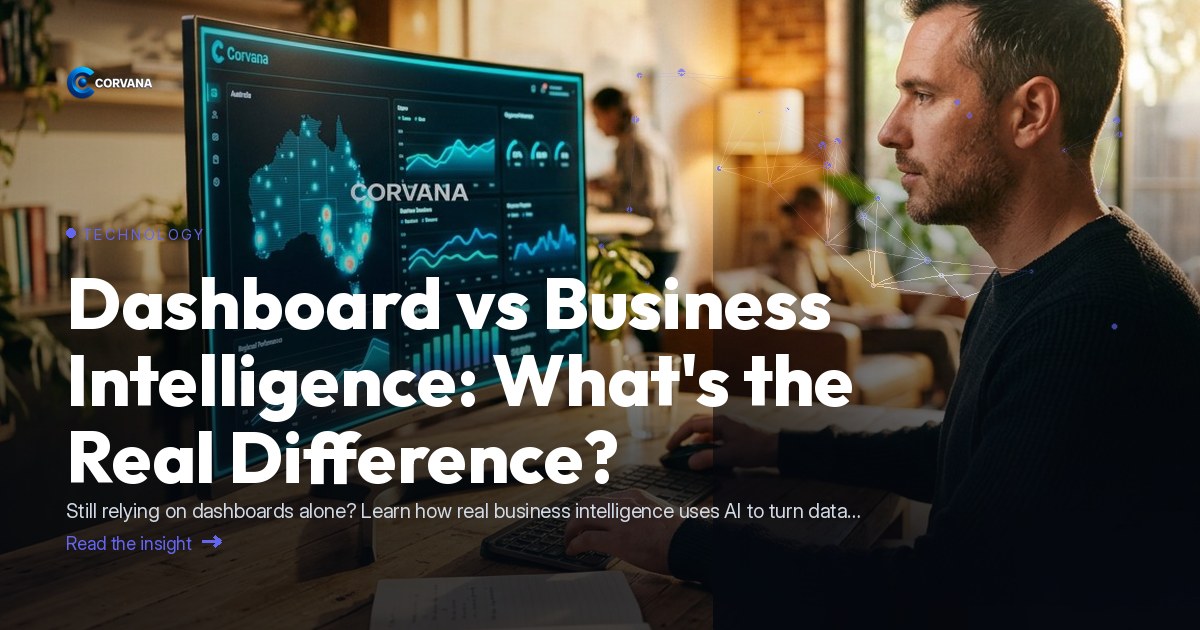
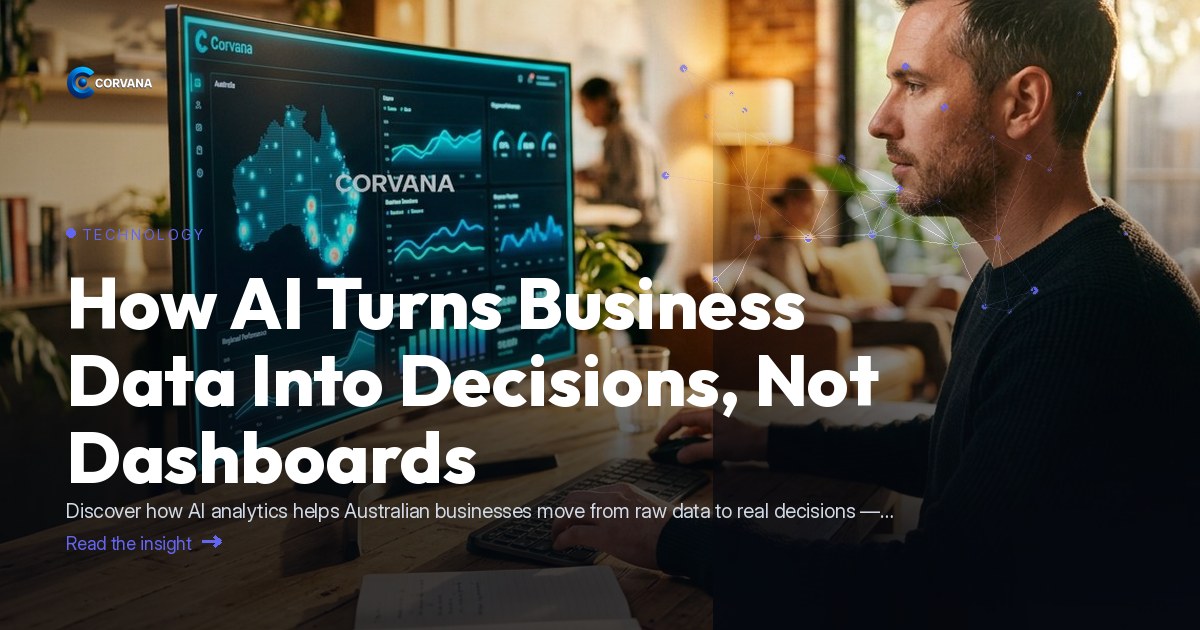
- Role-based dashboards with industry-specific permissions, ensuring each team member sees what's relevant to their function
The result is a platform that tells you what's likely to happen, what's going wrong early enough to fix it, and where the business is already performing well enough to double down.
Frequently Asked Questions
Is predictive analytics suitable for a small business, or is it only useful at scale?
Predictive analytics is genuinely useful at the SME level, particularly for cash-flow forecasting, demand planning and customer retention. The key requirement isn't business size — it's having consistent data flowing from your POS, accounting and customer systems. Modern platforms are designed to work with the data volumes typical of a small or medium operation.
How accurate is AI forecasting for revenue and demand?
Accuracy depends heavily on the quality and consistency of your historical data and how stable your trading patterns are. AI forecasting is generally most reliable for recurring patterns — seasonal peaks, weekly trading rhythms, subscription renewal cycles — and less reliable for one-off or unprecedented events. A good platform will indicate confidence levels alongside its forecasts rather than presenting projections as certainties.
Can AI forecasting help with Fair Work and payroll compliance?
AI monitoring can flag patterns that indicate compliance risk — for example, rostering patterns that may generate overtime obligations or break entitlement issues — but it's not a substitute for professional HR or legal advice. For authoritative guidance on employer obligations, the [Fair Work Ombudsman](https://www.fairwork.gov.au) is the definitive Australian source.
---
If you'd like to see how Corvana brings predictive analytics, automated reporting and early-warning insights together for your business, we'd be glad to walk you through it.