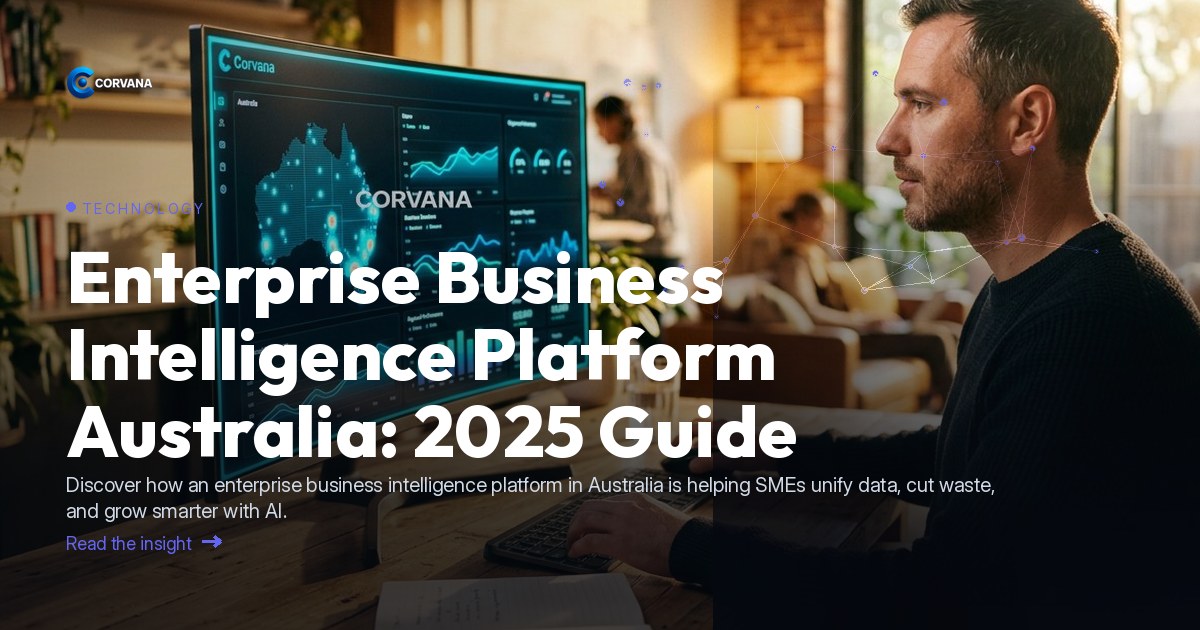
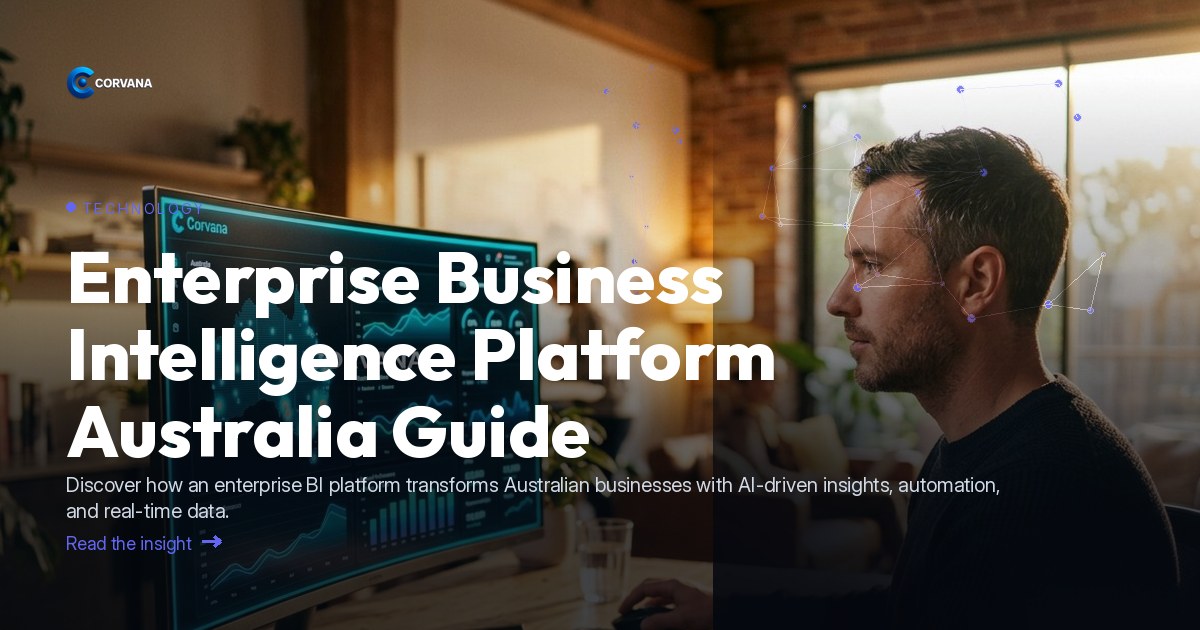
Enterprise Business Intelligence Platform Australia: What AI Is Really Changing for Australian Operators
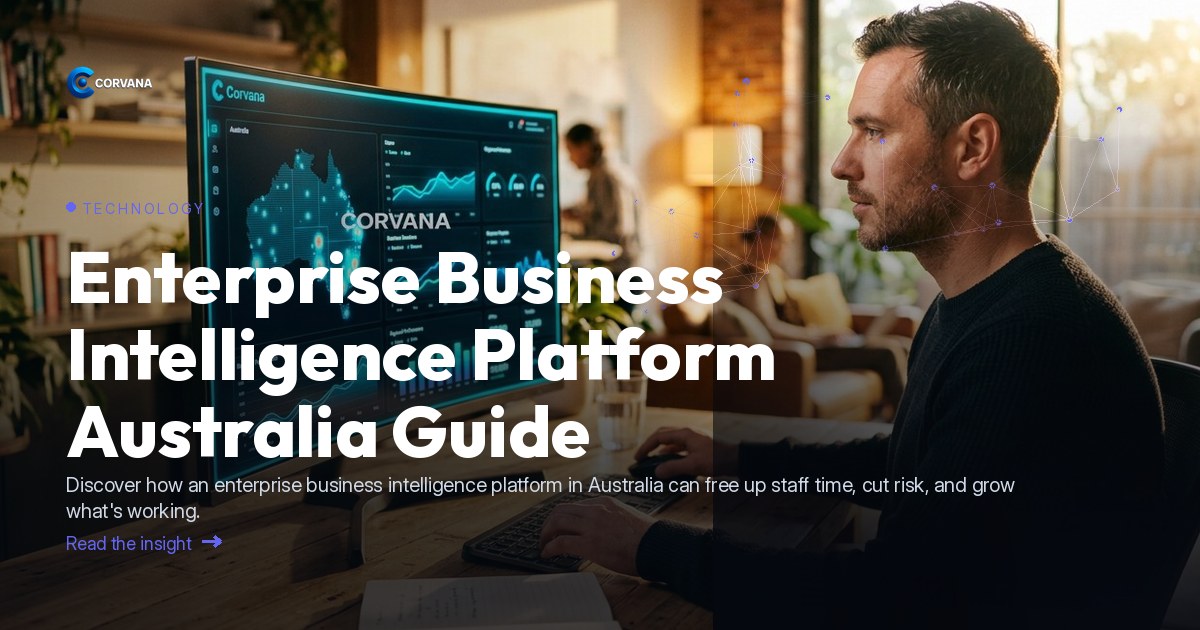
The rise of the enterprise business intelligence platform in Australia is not a technology trend reserved for ASX-listed corporations. AI-driven BI is reshaping how organisations of every size — from multi-site retailers to professional services firms — make decisions, manage risk, and grow. If you run a complex operation and still piece together your reporting from spreadsheets and gut feel, the gap between you and your more data-savvy competitors is widening faster than most operators realise.
What Is an Enterprise Business Intelligence Platform in Australia?
An enterprise business intelligence platform in Australia is a centralised software solution that pulls data from across a business — accounting, POS, payroll, CRM, and more — and uses AI to surface real-time insights, automate reporting, and flag risks before they become costly problems. For Australian operators, the best platforms also benchmark performance against local industry data (such as [ABS](https://www.abs.gov.au) and ANZSIC classifications) and account for the regulatory context unique to this market. Corvana is built specifically for this environment, translating raw business data into decisions operators can act on today.
Why AI Is Fundamentally Changing Business Intelligence
For years, "business intelligence" meant a dashboard your IT team built and your finance manager occasionally checked. AI changes the relationship entirely. Instead of static reports, you get a system that learns your business's patterns, flags anomalies the moment they emerge, and tells you not just what happened, but what is likely to happen next.
The [Productivity Commission](https://www.pc.gov.au) has consistently highlighted that productivity gains from digital technology adoption remain uneven across Australian industries — with the greatest opportunity sitting in businesses that are large enough to generate rich data but have not yet built the infrastructure to use it. That is precisely the gap an AI-powered enterprise BI platform fills.
Three operator outcomes define the value: freeing up staff time, reducing weaknesses, and capitalising on existing strengths.
---
Outcome 1: Free Up Staff Time With Automated Reporting
Finance teams, operations managers, and business owners routinely spend hours each week pulling numbers from disconnected systems, reconciling figures, and building reports that are already outdated by the time they are shared.
An enterprise BI platform automates this entirely. Corvana's automated weekly reporting means your team receives a structured, AI-curated summary of performance — revenue, margin, labour cost, cash flow — without anyone having to compile it. Alerts are surfaced only when something genuinely needs attention, so staff are not drowning in noise.
Where the time savings compound:
- Payroll reconciliation across Deputy, Tanda, or Employment Hero against actual hours worked
- Revenue reporting pulled automatically from Square, Lightspeed, or Shopify
- Accounting data synced live from Xero, MYOB, or QuickBooks — no manual exports required
- Marketing performance consolidated from HubSpot, Salesforce, or ActiveCampaign alongside revenue data
The result: your team spends less time building reports and more time acting on what those reports reveal.
---
Outcome 2: Reduce Weaknesses — Catch Problems Before They Compound
Most business problems are not sudden. Margin erosion, customer churn, cash-flow shortfalls, and compliance exposures all have early signals — they are just buried in data that nobody is watching closely enough, consistently enough.
Corvana's AI continuously monitors the connections between your data streams. If labour costs as a percentage of revenue begin trending outside your benchmarks, you see it in real time — not at month-end when the damage is done. If a customer segment's purchase frequency drops, the churn early-warning system flags it before those customers disappear entirely.
For operators managing award-rate complexity, this matters enormously. The [Fair Work Ombudsman](https://www.fairwork.gov.au) makes clear that employers carry the responsibility for accurate wage payments — and underpayment exposure often comes from small, recurring rostering mismatches rather than deliberate error. Having a platform that connects your rostering data (Deputy, Tanda, Employment Hero) to your payroll figures inside one compliance-aware view reduces that risk materially.
Cash-flow forecasting is another critical safeguard. Corvana's AI-driven forecasting models project forward based on your actual revenue patterns, committed costs, and seasonal trends — giving operators a clear view of where cash will be tight, weeks before it becomes an emergency.
---
Outcome 3: Capitalise on Strengths — Find What Is Already Working
Reducing risk is only half the story. The more commercially exciting capability of an enterprise BI platform is identifying which parts of your business are already outperforming — and giving you the confidence to double down on them.
Corvana's benchmarking against ATO and ANZSIC industry data shows you not just how you are performing in absolute terms, but how you compare to businesses operating in the same sector. If one of your locations, product lines, or customer segments is consistently above benchmark, that intelligence should be driving your next investment decision.
Customer lifetime value analysis — drawing on CRM data from Salesforce, HubSpot, or ActiveCampaign — reveals which customer cohorts are your most valuable, so your marketing spend (via Mailchimp, Meta Business Suite) goes where it generates the highest return, not where it has always gone by habit.
---
How Corvana Applies AI to Enterprise Business Intelligence in Australia
Corvana is purpose-built for the Australian market, integrating with the tools Australian businesses already use:
- Accounting: Xero, MYOB, QuickBooks
- POS: Square, Lightspeed, Kounta, Mr Yum, Tyro, Shopify
- Rostering & payroll: Deputy, Tanda, Employment Hero
- CRM & marketing: HubSpot, Salesforce, Mailchimp, ActiveCampaign, Meta Business Suite
- Other: Google Analytics, Stripe, Google Sheets, Airtable, Notion
All of these data streams flow into a single real-time picture. AI-driven forecasting runs across cash flow, demand, and staffing. Industry-specific staff roles and permissions mean your team sees exactly what is relevant to their function — no more, no less. And the whole system benchmarks your results against Australian industry data, so context is built in from the start.
---
Frequently Asked Questions
Is an enterprise BI platform only for large corporations, or is it relevant to Australian SMEs?
Enterprise BI platforms are increasingly accessible and relevant to growing Australian SMEs, particularly those operating across multiple locations, managing complex data from several systems, or scaling quickly. The defining characteristic is not company size — it is data complexity. If your business generates meaningful data from POS, payroll, accounting, and CRM systems and you are not yet using that data in a unified, real-time way, an enterprise BI platform will likely deliver immediate operational value.
How does an enterprise business intelligence platform handle Australian compliance requirements?
A well-designed platform for the Australian market should connect rostering and payroll data to compliance monitoring, surfacing discrepancies against applicable award rates in context with the [Fair Work Ombudsman](https://www.fairwork.gov.au) framework. Corvana's compliance monitoring layer does exactly this — flagging potential wage and hours mismatches before they become underpayment exposures, and maintaining a clear audit trail across your integrated systems.
What is the difference between a standard dashboard tool and a true enterprise BI platform?
A standard dashboard tool visualises data you already have, in the format you set it up. An enterprise BI platform actively analyses data across multiple integrated sources, applies AI to identify patterns and anomalies, generates forecasts, and delivers proactive alerts — without requiring your team to know what questions to ask in advance. The intelligence comes to you, rather than waiting for you to go looking for it.
---
If you want to see how Corvana brings all of this together for your business, we'd be glad to walk you through it.