AI Is Changing How Australian Businesses Understand Their Own Data
If you've ever ended a busy week unsure whether you actually made money, or spent Sunday afternoon manually pulling numbers from three different systems, you're not alone. Understanding what is an AI BI tool — and whether one could help your business — has become one of the most practical questions Australian operators are asking right now. AI is no longer a concept reserved for large enterprises with dedicated data teams. It is actively reshaping how businesses of every size collect, interpret and act on their own information.
The shift matters because data volumes are growing faster than any team can manually process. Modern businesses generate signals from their point-of-sale, their accounting software, their rosters, their CRM and their customer behaviour — all day, every day. Without the right infrastructure to connect and interpret that information, most of it goes to waste.
---
What Is an AI BI Tool?
An AI BI tool — short for Artificial Intelligence Business Intelligence tool — is software that connects your business's data sources, uses machine learning to detect patterns and anomalies, and surfaces clear, actionable insights rather than raw numbers. Instead of a static spreadsheet or a report you have to build yourself, an AI BI tool monitors your business continuously, flags what needs your attention, and helps you forecast what's coming — so you can make decisions with confidence, not guesswork.
This is a meaningful step beyond traditional dashboards. Where older BI tools showed you what happened, AI BI tools tell you why it happened, what's likely to happen next, and what you should consider doing about it.
---
Why Traditional Reporting Falls Short
Most small and medium businesses in Australia rely on a patchwork of separate tools — accounting software, a POS system, a payroll platform, maybe a CRM. Each does its job, but none of them talk to each other in a way that gives you a complete picture. The [Australian Small Business and Family Enterprise Ombudsman](https://www.asbfeo.gov.au) has consistently highlighted that administrative burden is one of the biggest drains on SME productivity, and manual reporting sits right at the heart of that problem.
When your data lives in silos, you're always working from an incomplete picture. You might notice a cash-flow problem when it's already urgent, miss a margin leak that's been running for months, or overlook a customer segment that's quietly churning.
---
Three Outcomes That Actually Matter for Operators
1. Freeing Up Staff Time
The most immediate benefit most operators notice is time. An AI BI tool automates the weekly (or daily) reporting cycle — pulling data from every connected system, running the analysis, and delivering a clear summary without anyone needing to touch a spreadsheet. Your managers can stop compiling reports and start acting on them.
Automated rostering and payroll analytics, for example, can flag when scheduled labour costs are tracking over budget before the shift even starts — not after the payroll run.
2. Catching Problems Early
AI is particularly powerful when it comes to early warning. Rather than waiting for your end-of-month accounts to reveal a problem, an AI BI tool monitors your data continuously and alerts you to anomalies as they emerge:
- Margin leaks — a product category quietly underperforming against its benchmark
- Cash-flow risk — projected shortfalls based on current revenue and upcoming obligations
- Customer churn signals — customers whose purchase frequency is dropping before they disappear entirely
- Compliance gaps — award rate anomalies or payroll irregularities worth reviewing against [Fair Work Ombudsman](https://www.fairwork.gov.au) requirements
These early warnings give you options. By the time a problem shows up in a monthly P&L, your choices are often narrower.
3. Capitalising on What's Already Working
AI BI tools don't just find problems — they surface strengths you might not have quantified before. Which product lines carry your highest margins? Which customer segments spend more and churn less? Which staff members or locations consistently outperform? When these insights are surfaced automatically, you can lean into them deliberately — replicate what's working, reward what's performing, and allocate resources where the return is highest.
---
How Corvana Applies AI to This
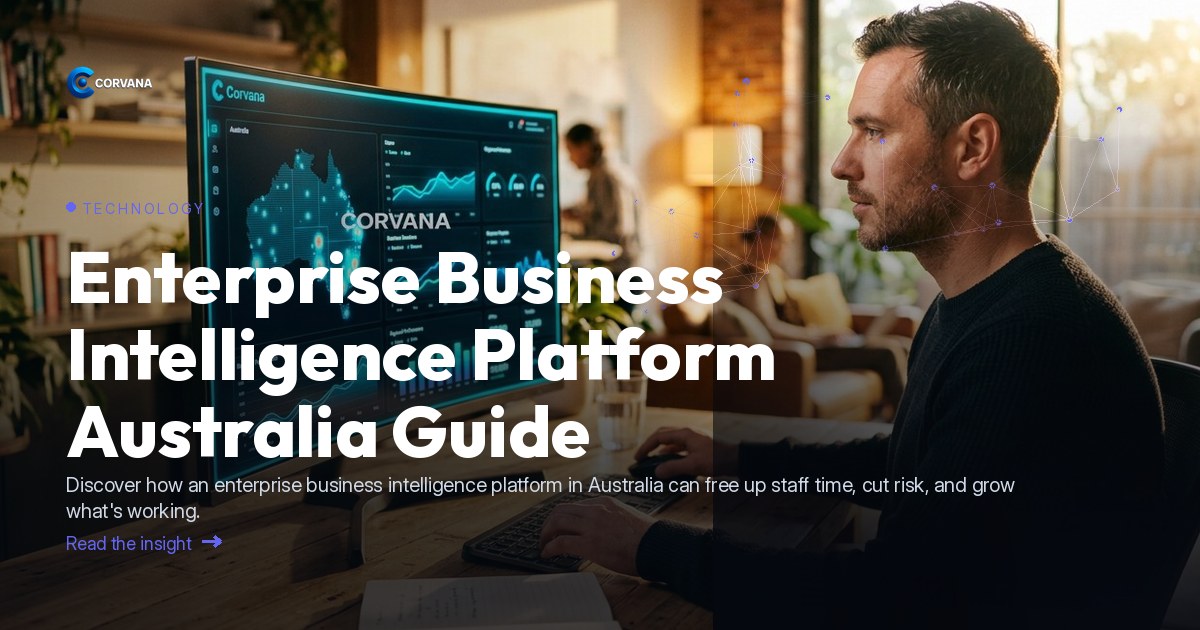
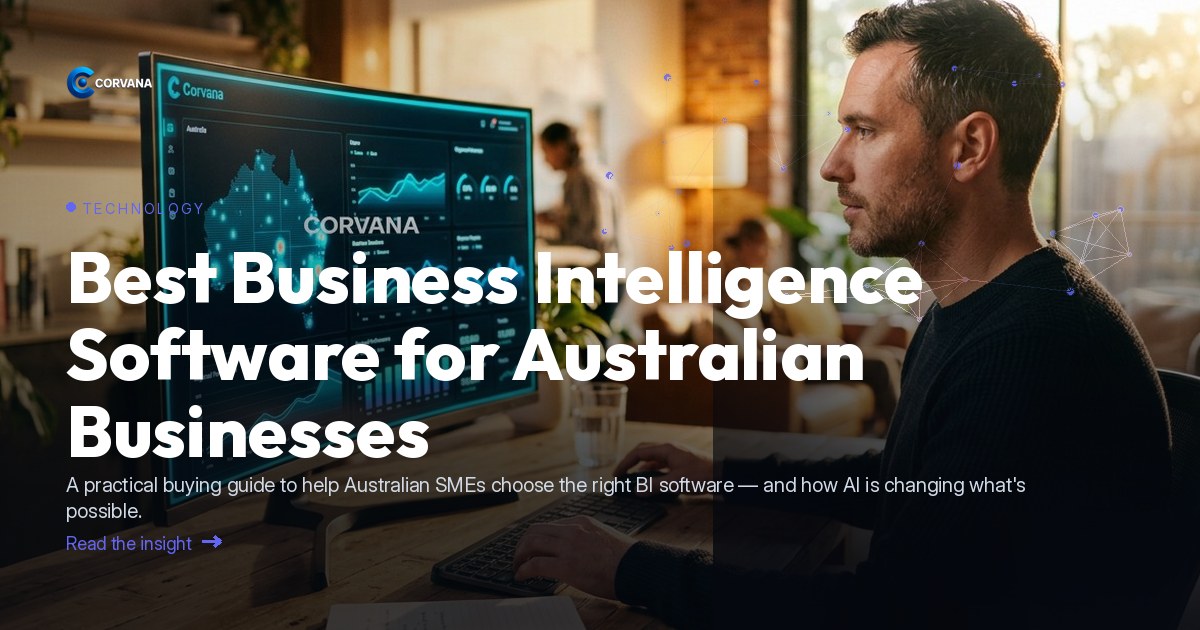
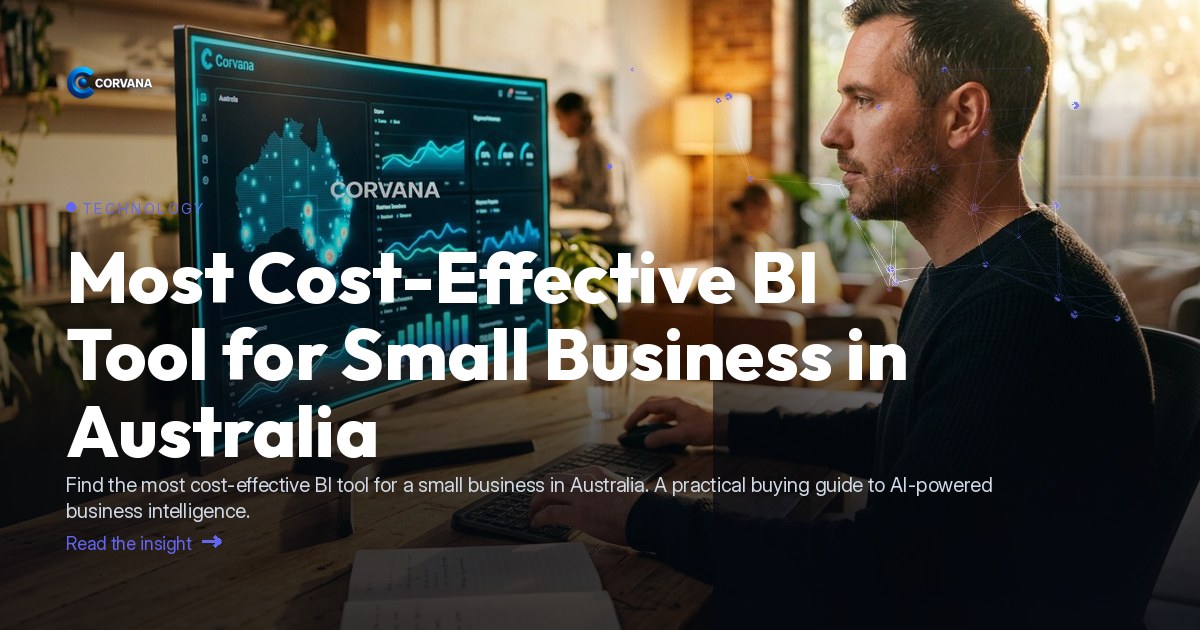
Corvana is an Australian AI business intelligence platform built specifically for operators who want clarity without complexity. It connects your existing tools — including accounting platforms like Xero, MYOB and QuickBooks; POS systems like Square, Lightspeed and Shopify; rostering and payroll tools like Deputy, Tanda and Employment Hero; and CRM platforms like HubSpot, Salesforce and ActiveCampaign — into a single, real-time view of your business.
Once connected, Corvana's AI layer goes to work:
- Live dashboards show your key metrics without manual input
- AI-driven forecasting projects cash flow, demand and staffing needs before you need them
- Automated weekly reports are delivered to your inbox without anyone building them
- Benchmarking compares your performance against ATO and ANZSIC industry data, so you know how you actually stack up
- Customer lifetime value and churn early-warning identifies your most valuable customers and flags those at risk
- Compliance monitoring helps you stay across award and payroll obligations
- Industry-specific roles and permissions mean your team sees what's relevant to them — and nothing that isn't
Corvana is designed for Australian operators, which means it's built around local compliance contexts, local data sources and the practical realities of running a business here. Research from [CSIRO](https://www.csiro.au) consistently points to AI adoption as one of the highest-leverage opportunities for Australian businesses — and Corvana is designed to make that adoption practical, not theoretical.
---
Frequently Asked Questions
Do I need a data analyst or IT team to use an AI BI tool?
No. Corvana is built for business operators, not data scientists. The platform connects to your existing software, processes the data automatically, and presents insights in plain language. If you can read a dashboard, you can use it.
How is an AI BI tool different from my accounting software's reports?
Your accounting software shows you what has already been recorded — invoices, expenses, payroll. An AI BI tool connects that data with your POS, rostering, CRM and more, then uses AI to identify trends, forecast what's coming, and flag anomalies before they become problems. It's the difference between a rear-view mirror and a navigation system.
Is my data secure on a cloud-based AI BI platform?
Reputable Australian platforms operate under Australian privacy law and data-sovereignty requirements. It's worth confirming with any provider where your data is stored and how access is controlled — Corvana stores data in Australian data centres and applies role-based permissions so staff only access what's relevant to their role.
---
See how Corvana brings all of this together in a single, real-time view built for your business.