The Practical Guide to Choosing the Most Cost-Effective BI Tool for a Small Business in Australia
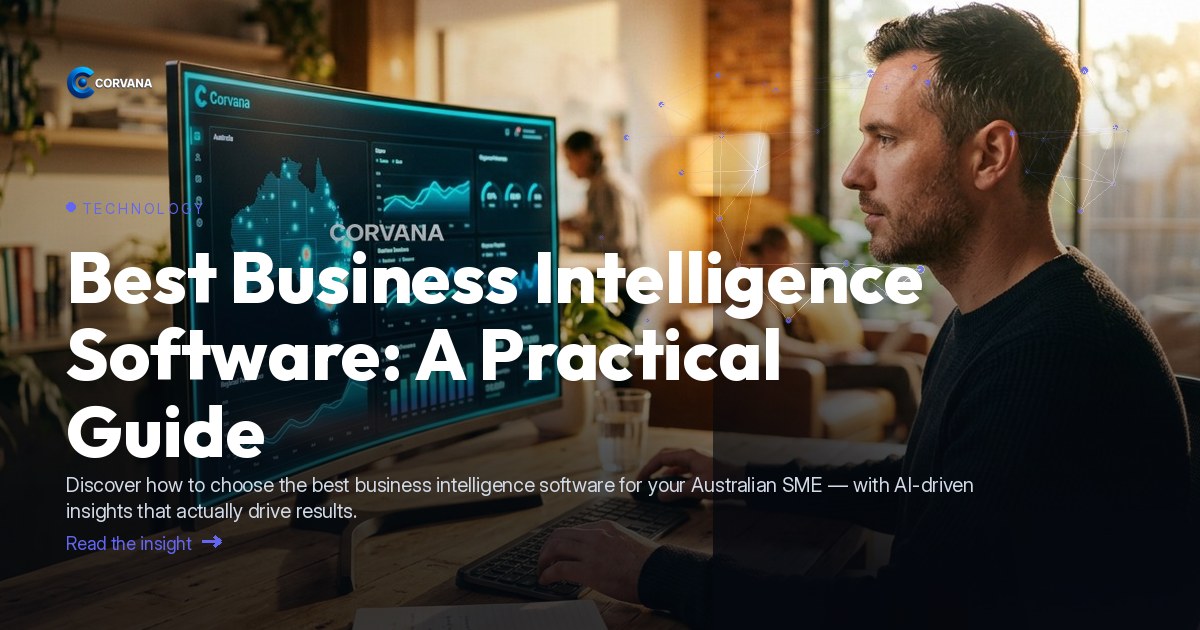
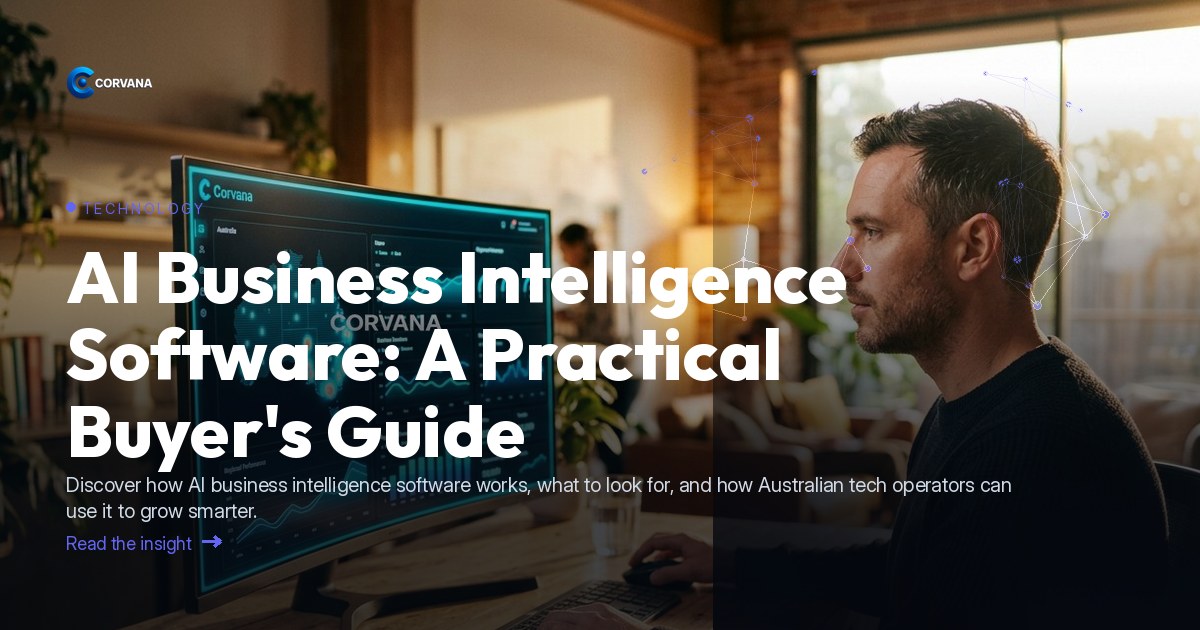
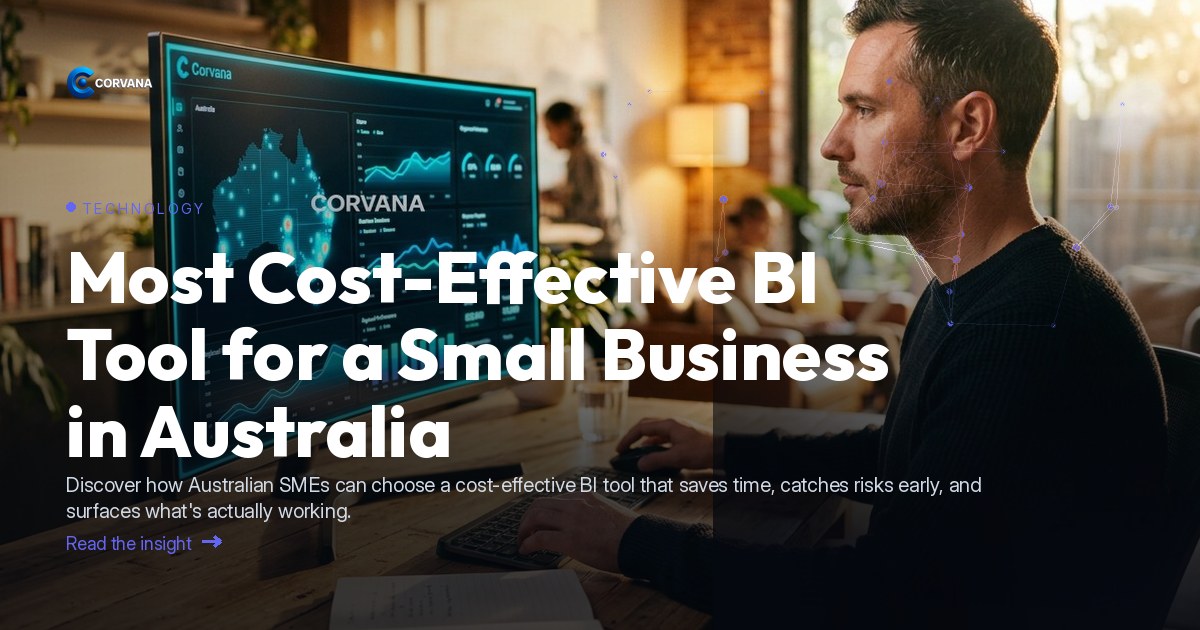
Artificial intelligence is quietly reshaping what "business intelligence" means for small operators in Australia — and finding the most cost-effective BI tool for a small business in Australia is no longer just about dashboards and reports. It is about getting a tool that actually thinks alongside you: spotting a cash-flow squeeze before it bites, flagging a customer segment that is quietly churning, or telling you which product line is carrying the weight while others drag on margin.
For small business owners managing multiple data sources — accounting in Xero, rostering in Deputy, sales through Square — the old approach of exporting spreadsheets and stitching together a picture manually is becoming both time-consuming and genuinely risky. A missed trend in week two can be an expensive problem by week six.
---
What Is the Most Cost-Effective BI Tool for a Small Business in Australia?
For most Australian SMEs, the most cost-effective BI tool is one that unifies your existing software — POS, accounting, payroll and CRM — into a single live view, automates your reporting, and uses AI to surface only what actually needs your attention. A platform purpose-built for SMEs, like Corvana, does this without requiring a data analyst on staff or enterprise-level spend. The real cost saving comes not from the subscription price alone, but from the hours recovered and the problems caught early.
---
Why Generic BI Platforms Often Disappoint Small Operators
Enterprise-grade BI tools were built for teams with dedicated analysts, clean data warehouses and months to configure. Small business operators in Australia need something that connects to the tools they already use, works out of the box, and speaks their language — not SQL queries and pivot tables.
According to [Gartner](https://www.gartner.com), a growing share of analytics investment is shifting toward augmented analytics — tools that use AI to automate insight generation rather than require users to build their own reports. For time-poor operators, this shift is significant. The best BI tools for small businesses do the heavy lifting automatically.
---
The Three Outcomes That Actually Matter
1. Freeing Up Staff Time
Every hour a manager spends pulling weekly reports, reconciling figures across platforms, or manually checking payroll against rosters is an hour not spent on the floor, with customers, or on growth.
A purpose-built AI BI platform automates these tasks. Automated weekly summaries land in your inbox without anyone touching a spreadsheet. Live dashboards replace the Monday-morning scramble. Staff roles and permissions mean your floor manager sees what is relevant to them — and nothing more.
2. Reducing Business Weaknesses Through Early Warnings
The most valuable thing a BI tool can do for a small business is catch problems before they compound. This includes:
- Margin leaks — a product category quietly underperforming against industry benchmarks
- Cash-flow risk — AI forecasting that projects forward from current trading patterns
- Compliance gaps — payroll anomalies flagged before they become a Fair Work issue
- Churn signals — customers whose purchase frequency is dropping before they disappear entirely
[IDC](https://www.idc.com) has consistently found that small businesses adopting AI-assisted analytics tools see measurable improvements in decision speed and risk identification. For Australian operators navigating cost pressures and tightening margins, early-warning capability is not a luxury — it is a practical necessity.
3. Capitalising on Your Strengths
Good BI is not just about finding what is broken. It is about doubling down on what is working. Which staff members are generating the highest average transaction value? Which customer segment has the strongest lifetime value? Which location or product line is outperforming ATO/ANZSIC industry benchmarks?
When you can see this clearly — not buried in a spreadsheet but surfaced automatically — you can make decisions with confidence: schedule your best people at peak times, run targeted campaigns to your highest-value customers, and allocate stock or resources toward your strongest performers.
---
How Corvana Applies AI to This
Corvana is built specifically for Australian SMEs and connects the platforms small businesses already run on.
On the accounting side, Corvana integrates with Xero, MYOB and QuickBooks to pull live financial data — tracking cash flow, margins and profit in real time. On the sales and POS side, connections to Square, Lightspeed, Kounta, Shopify and Tyro mean transaction data flows in automatically. Rostering and payroll integrations with Deputy, Tanda and Employment Hero allow labour cost to be tracked against revenue in a single view — a combination that makes wage-to-sales ratios visible and actionable.
For businesses running CRM or marketing activity, Corvana connects with HubSpot, Salesforce, Mailchimp, ActiveCampaign and Meta Business Suite, enabling customer lifetime value tracking and churn early-warning signals based on real behavioural data.
The AI layer does more than display data. It forecasts — cash flow, demand, staffing needs — and benchmarks your business against ATO and ANZSIC industry data so you know whether your margins are competitive or quietly slipping behind the sector. Automated weekly reports and industry-specific staff roles mean the right information reaches the right person without manual effort.
For Australian technology businesses and SMEs specifically, this matters because your data is often spread across more tools than traditional operators — yet the [Australian Bureau of Statistics](https://www.abs.gov.au) consistently shows that businesses engaging more deeply with digital tools and data outperform those that do not. Corvana is designed to close that gap for operators who do not have a data team.
---
A Practical Buying Checklist for Australian SMEs
When evaluating BI tools, ask these questions:
- Does it integrate directly with my existing POS, accounting and payroll tools — or will I need to export data manually?
- Does it surface insights automatically, or do I need to build every report myself?
- Is AI forecasting included, or is it an expensive add-on?
- Does it benchmark my performance against Australian industry data?
- Is pricing transparent and designed for SME scale?
- Is customer data stored and handled in compliance with Australian privacy law — see the [Office of the Australian Information Commissioner (OAIC)](https://www.oaic.gov.au) for what that means for your business?
- Can I control what different staff members can see?
A "yes" to all of these is a strong signal you are looking at a tool built for operators, not enterprises.
---
Frequently Asked Questions
Do I need a data analyst to use a BI tool as a small business?
No — and if a tool requires one, it is probably not the right fit for an SME. The best BI platforms for small businesses are designed so a business owner or manager can read the dashboard and act on it immediately, without any technical background. Corvana, for example, is built around plain-language summaries and automated insights rather than requiring users to build their own queries.
How is AI BI different from just having a dashboard?
A standard dashboard shows you what happened. An AI-powered BI tool interprets the data and tells you what it means — flagging anomalies, forecasting forward, comparing your results to benchmarks and prioritising what needs your attention. For a time-poor operator, that difference translates directly into faster, better decisions.
Is my business data safe if I connect all my platforms to a BI tool?
Data security should be a primary consideration in any evaluation. Look for platforms that are transparent about where data is stored, how it is encrypted, and what access controls are in place. Australian privacy obligations under the Privacy Act are overseen by the [OAIC](https://www.oaic.gov.au) — ensure any platform you use operates in compliance with these requirements.
---
See how Corvana brings all of this together for Australian small businesses — in one place, without the complexity.