
A Practical Guide to the Best Business Intelligence Software for Australian Businesses
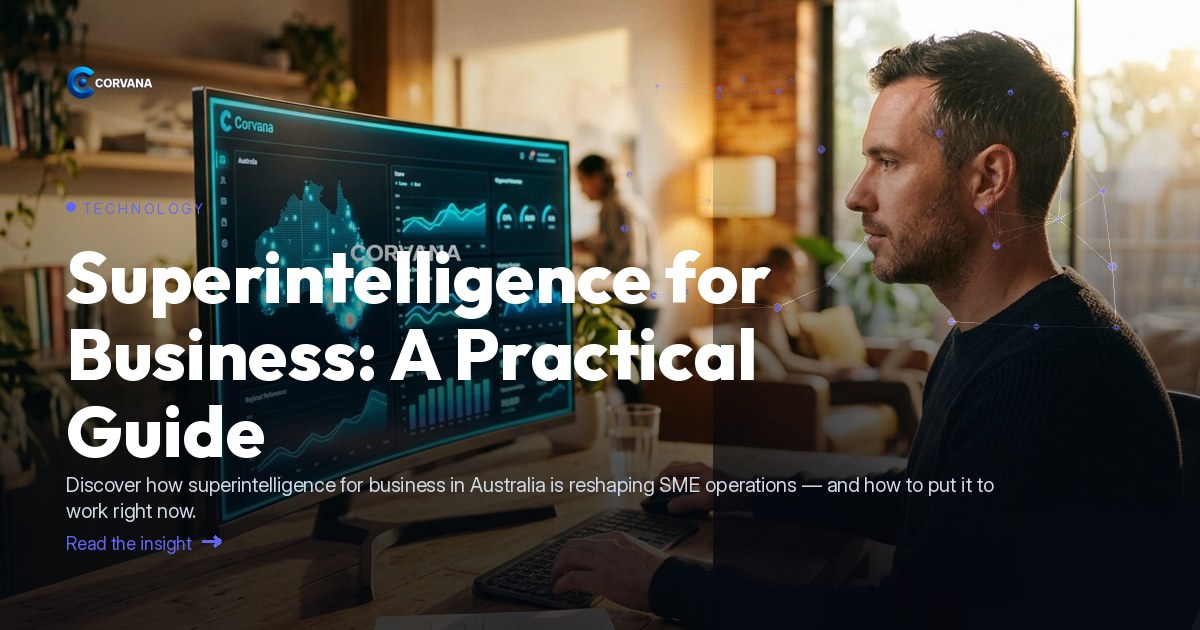
AI is reshaping how Australian technology businesses — and the SMEs they serve — make decisions. The shift is no longer about collecting more data; it is about turning that data into clear, timely action. Finding the best business intelligence software for Australian businesses has become one of the most consequential technology decisions an operator can make.
Where traditional reporting meant waiting for a monthly spreadsheet that was already out of date, modern AI-powered BI platforms surface anomalies, forecast trends and automate the reporting cycle entirely. For technology businesses specifically — whether you run a managed services practice, a SaaS operation, a digital agency or an IT reseller — the stakes are particularly high. You are often managing recurring revenue, complex project margins, contractor rosters and customer churn risk simultaneously.
What Is the Best Business Intelligence Software for Australian Businesses?
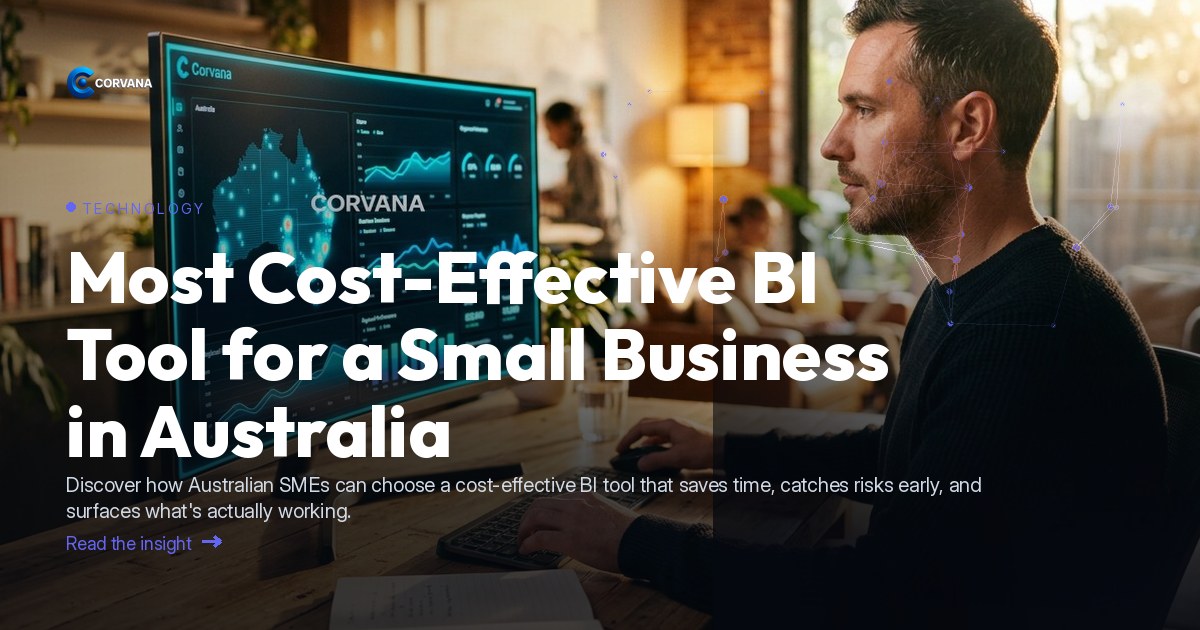
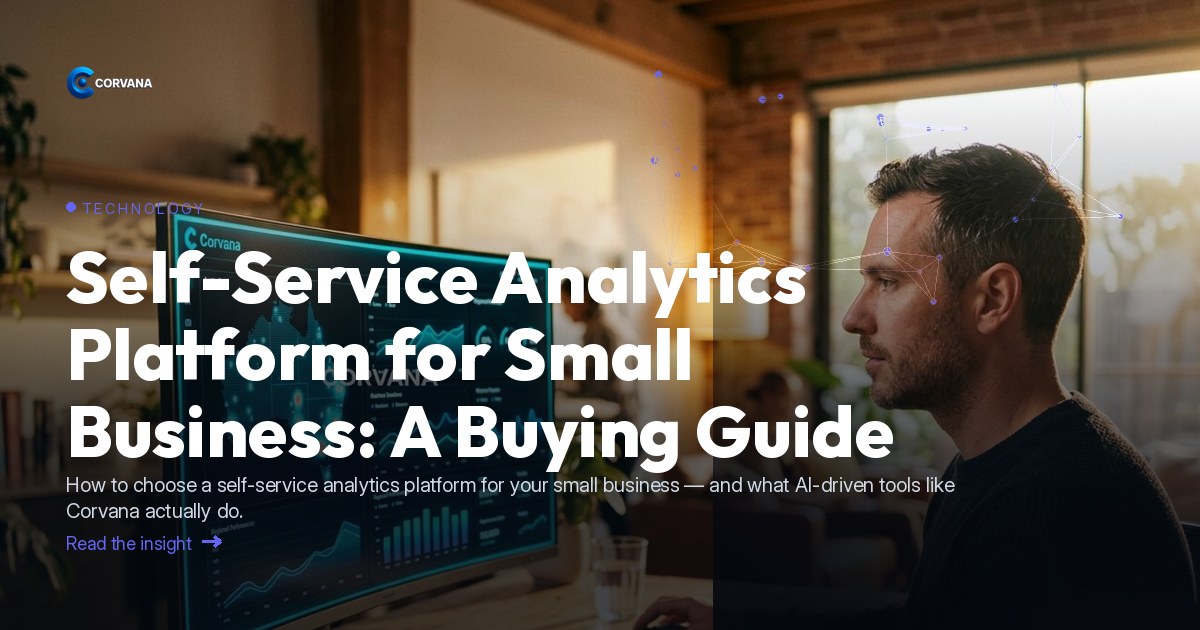
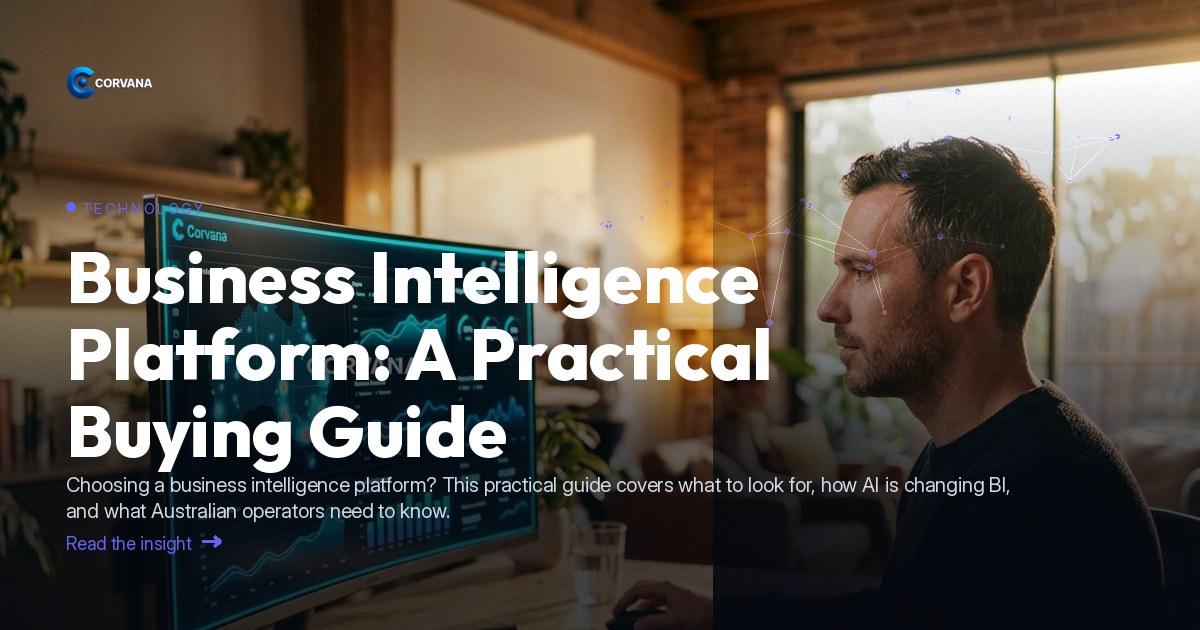
The best business intelligence software for Australian businesses is a platform that unifies your existing data sources — accounting, sales, payroll, CRM — into a single real-time view, surfaces risks and opportunities automatically, and is built around Australian compliance and benchmarking contexts. For most Australian SMEs, that means an AI-native platform that connects to the tools you already use, requires no data team to operate, and delivers insights in plain language rather than raw charts. Corvana is purpose-built to meet exactly this brief.
---
Why Generic BI Tools Often Fall Short for Australian Operators
Global BI platforms are designed for enterprise teams with dedicated analysts. Most Australian SMEs — including technology businesses — do not have that resource. The result is a tool that sits underused, or worse, produces dashboards that nobody has time to interpret.
Australian technology businesses face a specific combination of pressures: project-based cash flow, competitive labour markets for skilled staff, evolving data privacy obligations under the [Privacy Act](https://www.oaic.gov.au), and the need to benchmark against local industry norms rather than global ones. A BI platform that does not account for these realities will leave gaps precisely where you need coverage most.
Research from [Gartner](https://www.gartner.com) consistently shows that the barrier to BI adoption in mid-market businesses is not cost — it is the gap between raw data capability and actionable insight. The platforms that close that gap are winning.
---
Three Outcomes That Matter Most
1. Freeing Up Staff Time
Manual reporting is one of the biggest hidden costs in a technology business. When account managers, project leads or operations staff are spending hours each week pulling data from different systems and assembling reports, that is time not spent on clients or delivery.
AI-driven BI platforms automate this entirely. Automated weekly reporting means your team receives a curated summary of what has changed, what needs attention and what is tracking well — without anyone building a spreadsheet. Alerts are triggered only when something genuinely warrants attention, so staff are not drowning in noise.
2. Reducing Weaknesses — Catching Problems Early
For technology businesses, the risks that matter most include:
- Margin erosion on projects — scope creep and untracked contractor hours quietly destroying profitability
- Customer churn signals — declining usage, support ticket spikes or delayed renewals that predict lost accounts before they happen
- Cash flow gaps — the lag between project delivery and invoice payment creating dangerous troughs
- Compliance exposure — payroll and data handling obligations that can catch fast-growing teams off guard
Early-warning intelligence on each of these issues is what separates reactive businesses from resilient ones. [IDC](https://www.idc.com) research points to data-driven organisations recovering from disruptions significantly faster than peers — a meaningful advantage in a sector where client trust is everything.
3. Capitalising on Strengths
Not all clients, services, team members or revenue streams perform equally. A good BI platform tells you which customer segments have the highest lifetime value, which service lines carry the best margins, and which team members are your highest performers — so you can lean into what is working, not just fix what is broken.
Customer lifetime value modelling and churn early-warning give technology businesses a clear picture of where to focus retention effort and where to invest in growth.
---
How Corvana Applies AI to This
Corvana connects your existing technology stack — no rip-and-replace required — and applies AI across the unified data to deliver the three outcomes above.
Relevant integrations for technology businesses include:
- Accounting: Xero, MYOB, QuickBooks — for real-time cash flow forecasting and margin tracking across projects or service lines
- CRM & marketing: HubSpot, Salesforce, ActiveCampaign, Mailchimp — for customer lifetime value scoring, churn early-warning and pipeline health
- Rostering & payroll: Deputy, Tanda, Employment Hero — for labour cost monitoring and staff utilisation against revenue
- Other: Google Analytics, Stripe, Google Sheets, Airtable — for a complete picture of digital revenue and operational data
Corvana's AI forecasting engine runs across this unified data to produce cash flow forecasts, demand signals and staffing recommendations automatically. Benchmarking against ATO and ANZSIC industry data means your performance is always measured against what is actually typical for Australian technology businesses — not a global average that has no relevance to your context.
Industry-specific role permissions mean your account managers see client performance data, your financial controller sees margin and compliance alerts, and your leadership team sees the full picture — without anyone having access to data they should not.
The [Productivity Commission](https://www.pc.gov.au) has identified data capability as a core driver of productivity growth for Australian businesses. Corvana is built to make that capability accessible without requiring a data team.
---
Frequently Asked Questions
Do I need a dedicated analyst or IT team to use business intelligence software?
No — modern AI-native BI platforms like Corvana are designed for operators, not data scientists. Automated reporting, plain-language alerts and pre-built dashboards mean your team can act on insights without any technical expertise. The platform does the interpretation; your team does the decision-making.
How does Australian-specific benchmarking work in a BI platform?
Australian-specific benchmarking compares your business metrics — revenue growth, margins, cost ratios — against industry peers using ATO and ANZSIC classification data. This gives you a realistic picture of where you sit relative to businesses of a similar size and type in Australia, rather than global or US-centric benchmarks that may not reflect local market conditions.
Is my business data safe in a cloud BI platform?
Reputable Australian BI platforms operate under the Privacy Act and the Australian Privacy Principles administered by the [Office of the Australian Information Commissioner](https://www.oaic.gov.au). You should confirm that any platform you evaluate stores data in Australian data centres, uses encrypted connections and provides clear data handling policies before connecting your business systems.
---
See how Corvana brings your business data together in one place — so your team spends less time reporting and more time growing.