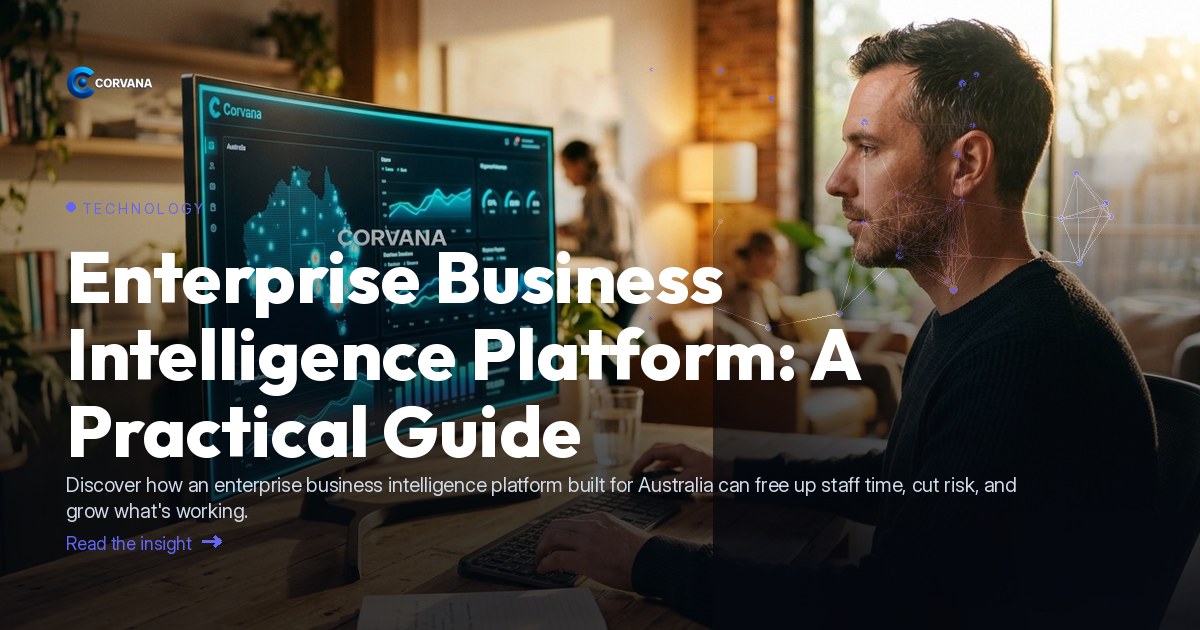
AI Is Reshaping How Australian Technology Businesses Make Decisions
The search for a reliable enterprise business intelligence platform Australia operators can actually trust is no longer a future ambition — it is a present-day operational necessity. Across Australian technology businesses, AI is doing something genuinely new: it is collapsing the gap between raw data and confident decisions. Where leaders once waited for end-of-month reports to understand what happened, they can now see what *is* happening and, more usefully, what is *likely* to happen next.
This shift matters because technology businesses generate enormous volumes of operational data — from project billing and recurring revenue to staff utilisation, customer churn signals and pipeline velocity. Without the right intelligence layer, that data sits inert inside disconnected tools. With the right platform, it becomes a live picture of where the business stands and where it needs to act.
What Is an Enterprise Business Intelligence Platform in Australia?
An enterprise business intelligence platform in Australia is a centralised software system that pulls data from a business's core operational tools — accounting, CRM, payroll, POS and more — and applies AI to surface insights, forecasts and alerts in real time. For Australian operators, the best platforms benchmark performance against local industry data (such as [ABS](https://www.abs.gov.au) and ANZSIC classifications), support compliance monitoring relevant to Australian regulations, and present findings through role-specific dashboards that non-technical staff can genuinely use.
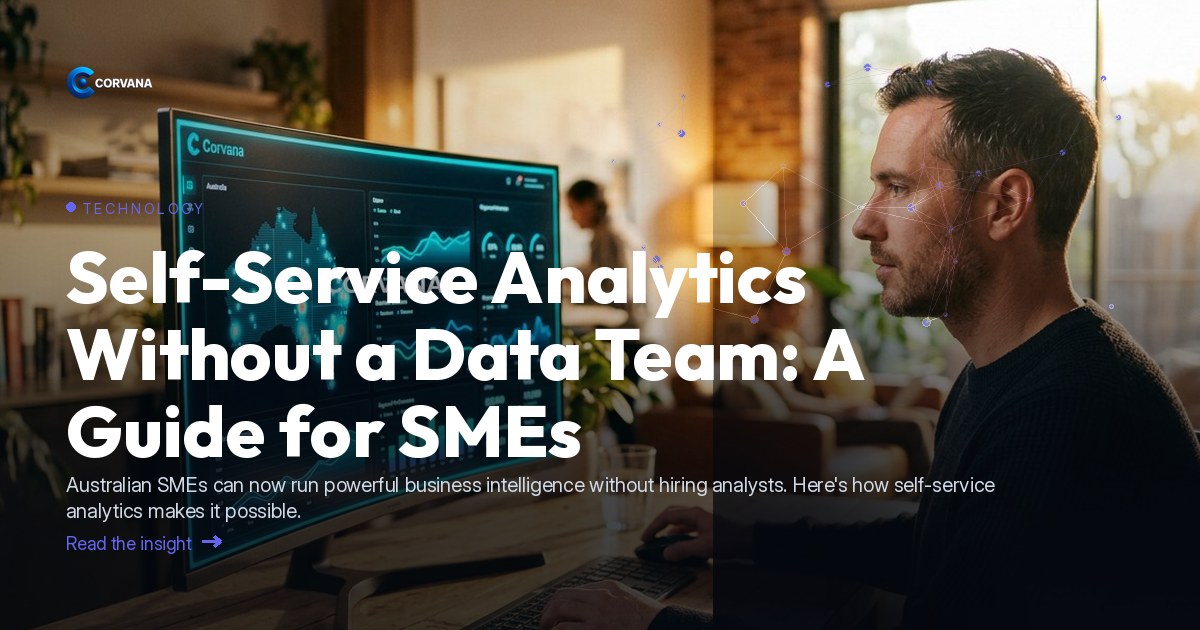
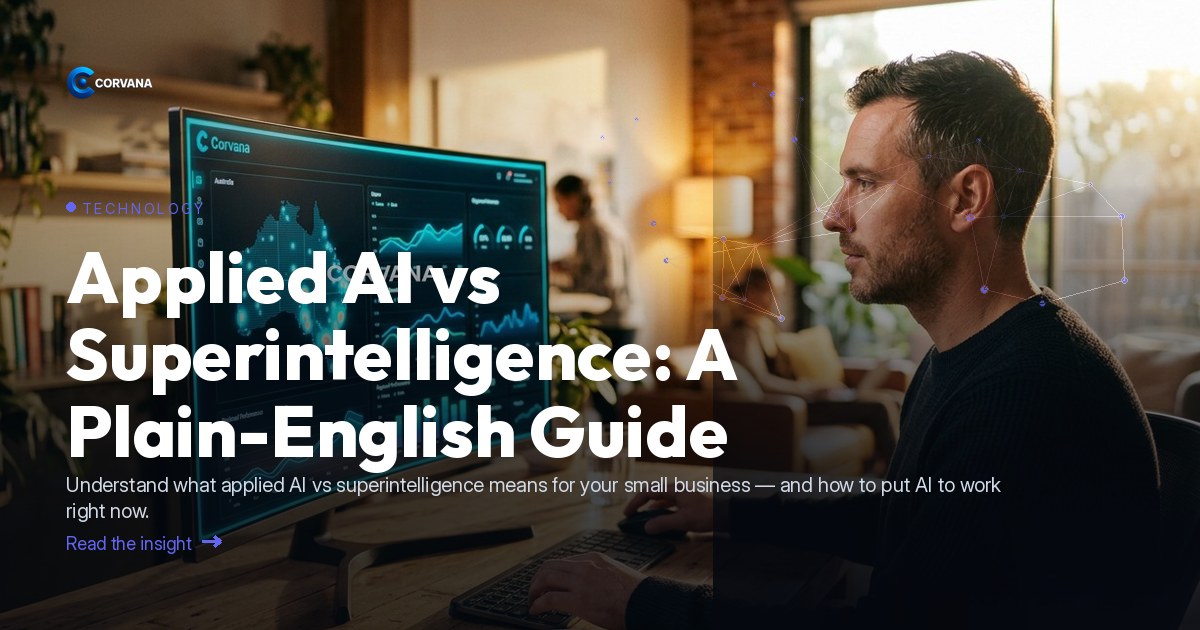
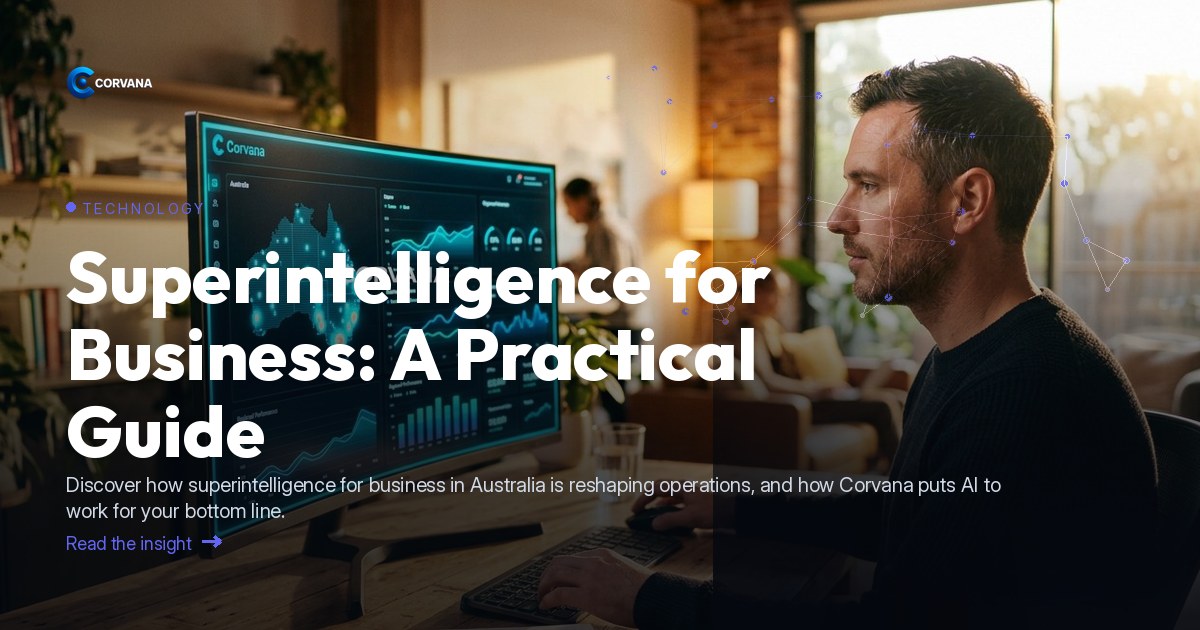
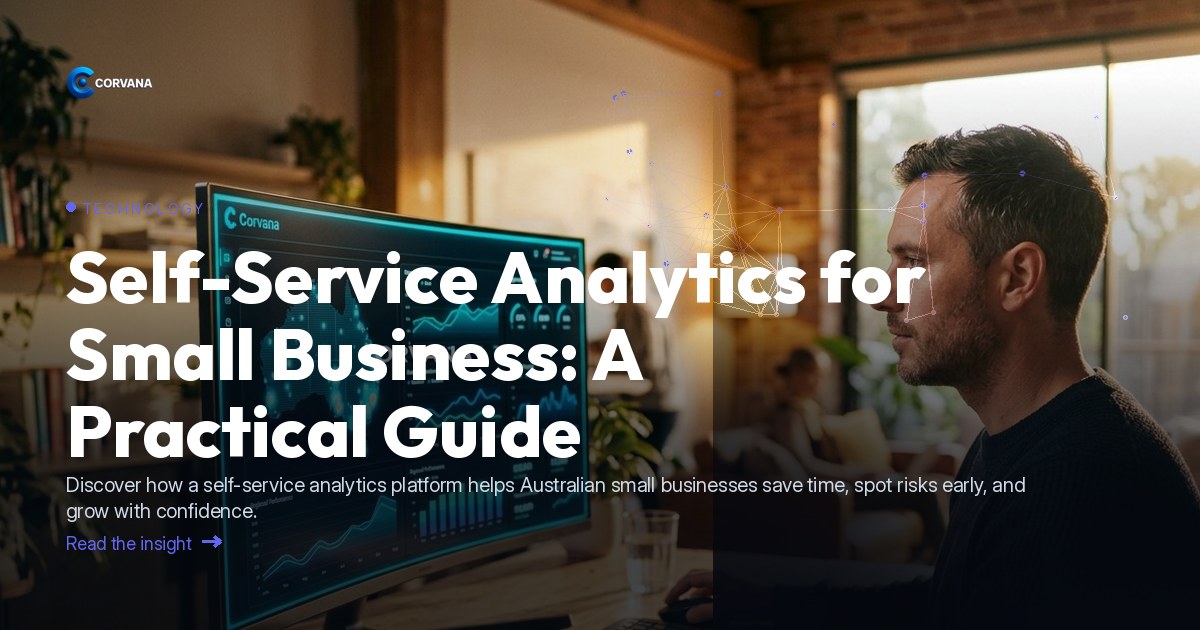
Corvana is purpose-built for exactly this: a unified AI business intelligence platform that connects a technology business's existing tools into one real-time picture, with no need for a dedicated data analyst to interpret it.
The Three Outcomes That Matter Most
1. Freeing Up Staff Time Through Automated Reporting
Manual reporting is one of the most persistent drains on a technology business's operational capacity. Account managers, finance leads and operations staff routinely spend hours each week pulling figures from separate systems, reconciling numbers and assembling slide decks that are already outdated by the time they are shared.
An AI-driven BI platform eliminates this cycle. Corvana's automated weekly reporting means that the right people receive the right summary at the right time — without anyone building it manually. Dashboards update in real time as data flows in from integrated tools, so leadership can arrive at a Monday stand-up already briefed rather than still assembling the picture.
For technology businesses where billable time is a core revenue metric, reclaiming this administrative overhead and redirecting it toward client delivery or business development is a direct improvement to the bottom line.
2. Reducing Weaknesses by Catching Problems Early
The risks that erode technology businesses most quietly are often invisible until they become expensive. Margin compression on fixed-fee engagements, rising staff costs against flat revenue, early churn signals in a subscription base, or a services contract that is running over budget — none of these announce themselves loudly.
[Gartner](https://www.gartner.com) consistently highlights that organisations with strong data and analytics capabilities respond to business risk faster than those relying on periodic manual reviews. Corvana applies this principle directly: its AI monitors incoming data continuously and surfaces anomalies, early-warning flags and compliance gaps before they compound.
For a technology business, this might look like an alert that a key client's engagement activity has dropped — a churn signal — weeks before their renewal conversation. Or a cash-flow forecast that flags a gap three months out, giving leadership time to act rather than react. These early warnings reduce the kind of weaknesses that quietly hollow out an otherwise strong business.
3. Capitalising on Your Strengths — People, Products and Segments
Beyond risk reduction, AI-driven BI reveals where a technology business is genuinely winning. Which service lines carry the strongest margins? Which client segments renew most reliably and generate the highest lifetime value? Which team members or delivery leads consistently produce the best project outcomes?
Corvana's customer lifetime value analysis and benchmarking tools answer these questions with data rather than gut feel. When a technology business knows which of its offerings performs above the ANZSIC industry average — informed by data from the [Australian Bureau of Statistics](https://www.abs.gov.au) — it can make confident decisions about where to invest, which verticals to pursue, and how to position the business for sustainable growth.
How Corvana Applies AI to Technology Businesses
Corvana connects directly with the tools most technology businesses already use:
- Accounting: Xero, MYOB, or QuickBooks feed live revenue, cost and cash-flow data into Corvana's forecasting engine
- CRM & pipeline: HubSpot, Salesforce and ActiveCampaign surface deal velocity, lead quality and churn signals
- Payroll & rostering: Deputy, Tanda and Employment Hero provide staff cost data that Corvana tracks against project and revenue benchmarks
- Marketing performance: Google Analytics, Mailchimp and Meta Business Suite connect campaign spend to revenue outcomes
- Project and operational tools: Airtable, Notion and Google Sheets can feed custom data directly into Corvana's dashboards
Once connected, Corvana's AI generates forecasts across cash flow, demand and staffing needs — and presents them through role-specific dashboards so that a CFO, an operations manager and a sales lead each see exactly what is relevant to them, without navigating data that isn't. Automated weekly reports replace manual assembly, and compliance monitoring keeps the business aware of obligations without dedicated administrative oversight.
For technology businesses operating across multiple product lines or client segments, Corvana's benchmarking against ATO and ANZSIC industry data provides an external reference point that internal reporting alone cannot offer. As [IDC](https://www.idc.com) research affirms, organisations that contextualise their own performance against industry benchmarks make better resource allocation decisions — and recover from setbacks more quickly.
Frequently Asked Questions
What makes a business intelligence platform suited to Australian technology businesses specifically?
An enterprise business intelligence platform built for Australia should integrate with Australian accounting and payroll tools, benchmark against local industry classifications, and support compliance with Australian data and regulatory obligations. It should also be designed for the way Australian SME and mid-market technology businesses actually operate — lean teams, multiple SaaS tools, and a mix of recurring and project-based revenue streams.
How quickly can a technology business start seeing value from a BI platform?
Most businesses begin seeing meaningful insights within days of connecting their core data sources. The initial value typically comes from a unified real-time view that replaces manual reconciliation; more sophisticated value — AI forecasting, churn alerts and benchmark comparisons — compounds over the following weeks as the platform builds a picture of business patterns and trends.
Is Corvana suitable for technology businesses that aren't large enterprises?
Yes. Corvana is designed for Australian SME and growing mid-market operators, not just large enterprises. Its role-specific dashboards and automated reporting mean that a team without a dedicated data analyst can use it effectively — and its integration with tools like Xero, HubSpot and Deputy means it connects to the stack most technology businesses are already running.
---
See how Corvana brings all of this together for your technology business — without adding complexity to how you already work.