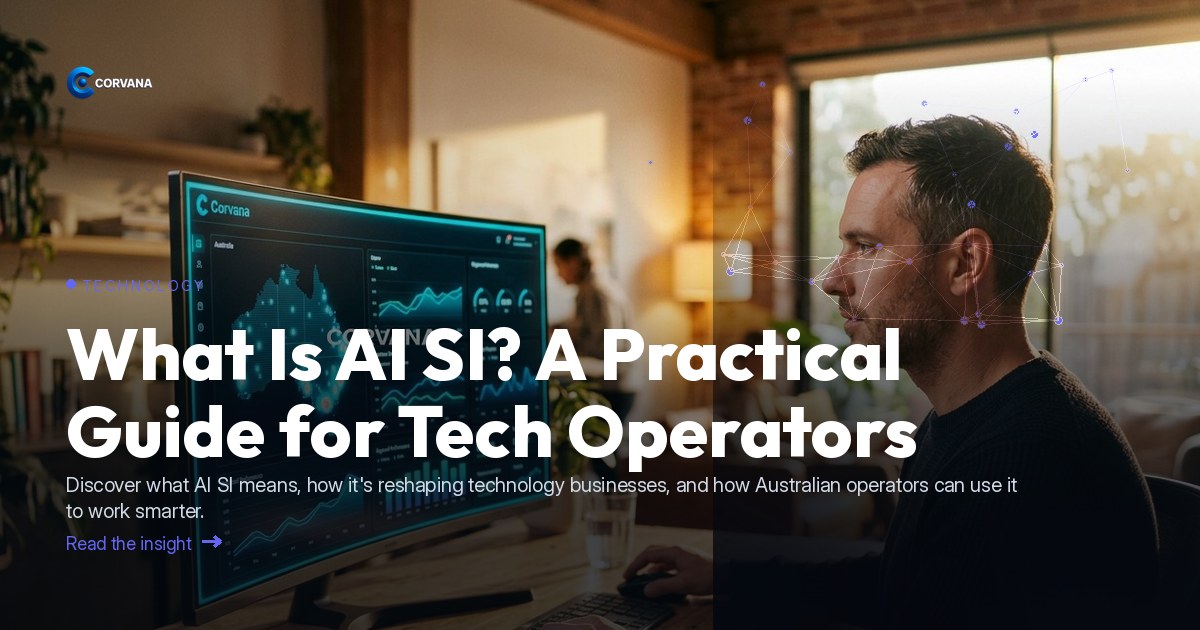
What Is AI SI? A Practical Answer for Technology Operators
AI SI — shorthand for *artificial intelligence system integration* — is reshaping how technology businesses operate, compete and grow in Australia. At its core, AI SI describes the practice of embedding artificial intelligence capabilities directly into the operational systems a business already runs: accounting, CRM, rostering, point-of-sale, and more. Rather than treating AI as a separate tool you bolt on, AI SI weaves intelligent decision-making into the everyday workflows your team depends on.
AI SI (artificial intelligence system integration) is the process of connecting AI-driven analysis and automation into a business's existing software stack so that intelligence flows automatically through operations. For technology businesses, this means AI works continuously across finance, staffing, customer data and compliance systems — surfacing insights without requiring manual reporting. The result is faster, better-informed decisions at every level of the organisation.
This is not a future-state concept. According to [Gartner](https://www.gartner.com), AI integration into enterprise and mid-market systems is already one of the fastest-moving priorities for technology operators globally, and the pressure to embed AI into core business processes is intensifying across every sector — including the technology industry itself.
---
Why AI SI Matters Right Now for Technology Businesses
Technology businesses face a paradox: they are often the first to advocate for AI adoption in client industries, yet many still run their own internal operations on disconnected spreadsheets, siloed software and reactive reporting.
The cost of that disconnection shows up in:
- Delayed decisions — weekly or monthly reports mean problems surface too late to act on
- Hidden margin leaks — project overruns, underpriced services or unclaimed software licence costs that erode profitability quietly
- Staff burnout — skilled team members spending hours consolidating data instead of doing the work clients pay for
- Churn blind spots — no early warning when a key account is disengaging, until the cancellation email arrives
When AI is properly integrated across systems, these gaps close — not because someone works harder, but because the business is watching all the time.
---
Outcome 1 — Freeing Up Staff Time Through Automation
The most immediate benefit of AI SI for technology operators is the recapture of time. Automated reporting replaces the weekly ritual of pulling numbers from Xero or MYOB, cross-referencing project costs, and assembling a dashboard that is already out of date by the time it's distributed.
With AI system integration in place, real-time dashboards update continuously. Team leads and directors see what they need without waiting for someone to compile it. Payroll data from Deputy or Employment Hero flows alongside project revenue, so you can see immediately whether billable utilisation is tracking against labour cost — without a single manual calculation.
For technology firms managing multiple clients or revenue streams, this time recapture is substantial. Staff redirected away from administrative consolidation are available for delivery, client success and growth work.
---
Outcome 2 — Reducing Weaknesses With Early Warnings
AI SI earns its credibility when it catches problems before they become expensive. For technology businesses, the critical early-warning signals include:
- Cash flow risk — AI forecasting flags the gap between project invoicing and payroll run dates, well ahead of a shortfall
- Margin deterioration — when hourly project costs creep above quoted rates, AI catches the trend in real time rather than at the post-mortem
- Compliance exposure — payroll compliance against award conditions (a live issue for tech firms using flexible contractors and permanent staff) is monitored continuously
- Customer churn signals — declining engagement scores or reduced transaction frequency in your CRM surface as early warnings, not post-event analysis
The [Australian Bureau of Statistics](https://www.abs.gov.au) consistently shows that cash flow management is among the most common pressure points for small-to-medium businesses. AI-driven forecasting addresses this directly by modelling forward cash positions based on confirmed and pipeline revenue — not assumptions.
---
Outcome 3 — Capitalising on Strengths
Not all of AI SI is about defence. Smart integration also tells you clearly what is *working* — and helps you do more of it.
For technology operators, that means identifying:
- Your highest-margin service lines (and pricing the rest accordingly)
- The client segments with the strongest lifetime value and lowest churn
- The team members and project types that consistently outperform
- The locations, channels or verticals where growth is genuinely accelerating
Benchmarking your performance against ANZSIC industry data gives context that a standalone P&L simply cannot provide. Are your margins in line with comparable technology services businesses? Is your staff cost as a percentage of revenue trending in the right direction? These questions have answers — if your systems are integrated to surface them.
---
How Corvana Applies AI SI in Practice
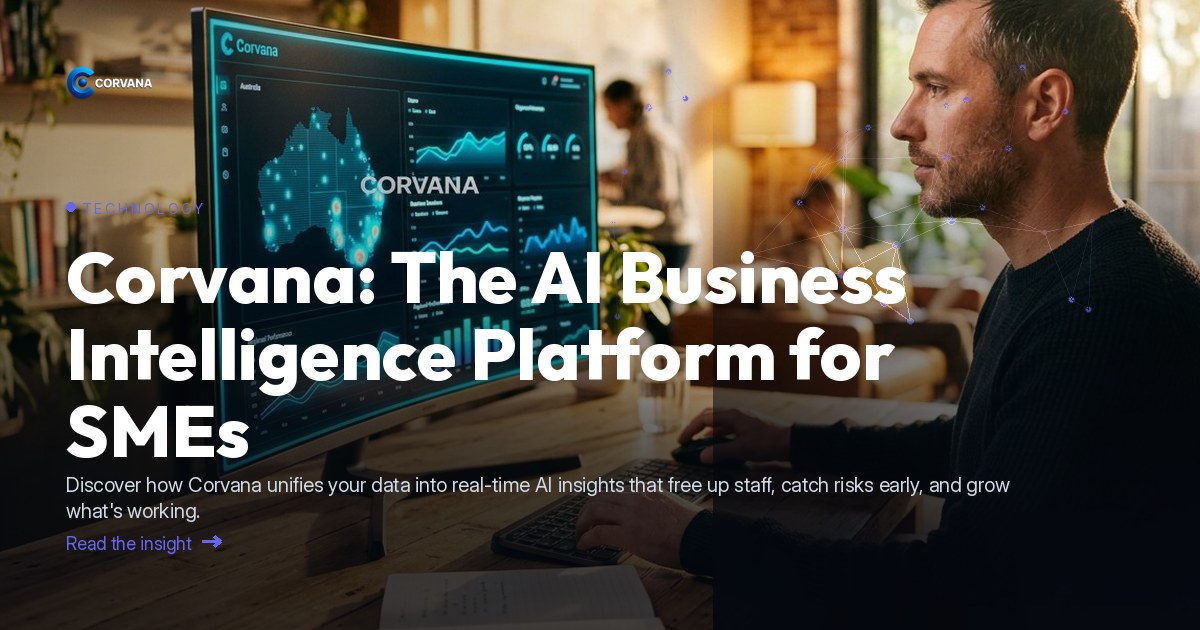
Corvana is an Australian AI business-intelligence platform built specifically to deliver AI SI for SME operators, including technology businesses.
Here is how the integration works in practice:
- Accounting — Corvana connects to Xero, MYOB and QuickBooks to pull real-time revenue, cost and margin data
- Rostering and payroll — integrations with Deputy, Tanda and Employment Hero surface labour cost alongside billable output
- CRM and marketing — HubSpot, Salesforce, ActiveCampaign and Mailchimp data feeds into customer lifetime value tracking and churn early-warning
- Analytics — Google Analytics connects web and pipeline performance to commercial outcomes
- Productivity tools — Google Sheets, Notion and Airtable can feed supporting operational data into the unified dashboard
The result is a single real-time picture of your technology business — not six separate logins and a spreadsheet to reconcile them.
Corvana's automated weekly reporting means your leadership team receives a structured, AI-generated summary of what moved, what risks are emerging and where performance is strongest — without anyone on the team having to build it. Forecasting covers cash flow, demand and staffing, calibrated against ATO and ANZSIC benchmarks for technology-sector businesses.
For technology operators thinking about their own AI SI posture, [CSIRO](https://www.csiro.au) offers useful Australian-context research on AI adoption maturity, and [Forrester](https://www.forrester.com) provides global frameworks for evaluating AI integration readiness. Neither replaces the practical step of connecting your actual systems — but they inform the strategic conversation well.
---
Frequently Asked Questions
What does AI SI mean in plain language?
AI SI stands for artificial intelligence system integration. It means connecting AI-driven analysis and automation into the software systems a business already uses — accounting, CRM, payroll, and so on — so that intelligence is built into daily operations rather than sitting in a separate tool. For technology businesses, it is the difference between having AI as a feature and having AI as part of how the business actually runs.
How is AI SI different from just using an AI tool?
A standalone AI tool answers specific questions when you ask them. AI SI means the AI is continuously watching your connected systems, generating alerts, forecasts and reports automatically without anyone having to prompt it. The practical difference is that AI SI catches problems you did not know to look for, whereas a standalone tool only helps if you already know the right question.
Is AI SI relevant to small technology businesses, not just enterprises?
Absolutely. Many of the most immediate benefits — automated reporting, cash flow forecasting, churn early-warning — are especially valuable for smaller technology businesses where there is no dedicated analyst or finance team to do this work manually. AI SI effectively gives a ten-person technology firm the operational intelligence capability that larger businesses have had for years, at a fraction of the cost and complexity.
---
See how Corvana brings AI SI together for your technology business in one connected, real-time platform.